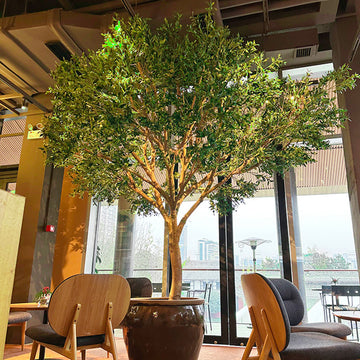
Round & square topiary for sculpted, enduring greenery
Round square topiary is a refined way to introduce structure, symmetry, and greenery to interiors and outdoor areas. In this curated Faux Natural collection, each piece is designed to echo the artistry of hand-clipped gardens while offering the ease and reliability of premium artificial topiary trees. Whether you are framing an entrance, styling a lobby, or elevating a dining table, these sculpted forms bring a sense of order and calm to any setting.
What defines a round square topiary in modern décor?
This category brings together two complementary silhouettes: classic spheres and crisp cubes. A round artificial topiary evokes traditional garden design, reminiscent of stately manors and formal hedges. An artificial square topiary introduces a more architectural expression, with clean lines that resonate beautifully in contemporary spaces.
Many pieces in this collection reinterpret botanical favorites such as boxwood and olive into sculptural forms. From boxwood topiary balls arranged in single or double tiers to refined square boxwood topiary designs, each element has been careful...
Round & square topiary for sculpted, enduring greenery
Round square topiary is a refined way to introduce structure, symmetry, and greenery to interiors and outdoor areas. In this curated Faux Natural collection, each piece is designed to echo the artistry of hand-clipped gardens while offering the ease and reliability of premium artificial topiary trees. Whether you are framing an entrance, styling a lobby, or elevating a dining table, these sculpted forms bring a sense of order and calm to any setting.
What defines a round square topiary in modern décor?
This category brings together two complementary silhouettes: classic spheres and crisp cubes. A round artificial topiary evokes traditional garden design, reminiscent of stately manors and formal hedges. An artificial square topiary introduces a more architectural expression, with clean lines that resonate beautifully in contemporary spaces.
Many pieces in this collection reinterpret botanical favorites such as boxwood and olive into sculptural forms. From boxwood topiary balls arranged in single or double tiers to refined square boxwood topiary designs, each element has been carefully shaped for a balanced, tailored look that feels considered and intentional in any décor scheme.
Choosing between artificial round topiary and artificial square topiary
The choice between a faux round topiary and a faux square topiary often comes down to the atmosphere you wish to create.
Choose artificial round topiary when you want:
- Soft, welcoming silhouettes that feel classic and timeless
- Gentle repetition of shapes along a hallway, balcony, or garden path
- Elegant symmetry around fireplaces, console tables, or entry doors
- A touch of formality without appearing overly strict or severe
Choose artificial square topiary when you want:
- Bold geometric topiary forms that complement modern and minimalist interiors
- Clear architectural lines that echo contemporary furniture and façades
- Defined edges that stand out against soft furnishings or fluid textiles
- A striking contrast when paired with round mirrors, curved sofas, or arched doorways
Blending the two shapes can be especially effective. For instance, boxwood topiary balls in tall planters alongside a low square boxwood topiary creates a layered, gallery-like composition that feels curated rather than matched.
Styling ideas for homes, terraces, and gardens
Round square topiary can transform a home with subtle but powerful gestures. A pair of tall round artificial topiary trees can frame a doorway, making arrivals feel special and thoughtfully designed. Smaller pieces can anchor console styling: place a faux round topiary at one end of a console and balance it with a stack of books or a sculptural object at the other.
In open-plan living spaces, a row of mid-height geometric topiary elements can visually separate zones without blocking light or views. Position two square forms at the edge of a dining area to signal a shift from lounging to entertaining. On terraces or balconies, mix heights and shapes: elevated boxwood topiary balls in slender planters, complemented by lower square pieces that define a seating nook.
Bedrooms benefit from smaller-scale pieces. A mini faux round topiary on a nightstand, dresser, or windowsill brings greenery and shape without visual clutter. In kitchens, compact designs on open shelving or island corners introduce freshness that pairs beautifully with natural stone, wood, and metal finishes.
Refined greenery for events and weddings
For stylists and event planners, round square topiary offers sculptural greenery that stays picture-perfect throughout the celebration. Round artificial topiary shapes work beautifully as aisle markers, flanking the entrance to a ceremony space or lining the path to a reception area. Their symmetry helps guide the eye and gently directs movement.
Square topiary elements bring a contemporary touch to event design. Use a series of artificial square topiary forms to frame a bar area, highlight a stage, or anchor lounge groupings. Their geometric presence acts almost like movable architecture, allowing you to define spaces elegantly and efficiently.
Tabletop pieces are equally versatile. Mini boxwood topiary balls can be styled as centerpieces for intimate gatherings, layered with candles, linens, and glassware for a luxurious yet uncluttered tablescape. For grander occasions, a mix of tall floor-standing pieces and smaller geometric topiary arrangements creates depth and visual rhythm throughout the venue, especially when combined with complementary artificial plants from the wider collection.
Elevating commercial spaces with geometric topiary
In commercial environments, such as hotel lobbies, boutiques, offices, and restaurants, round square topiary brings an immediate sense of intention and polish. Strategically placed topiary elements can soften hard architectural lines while still aligning with a professional aesthetic.
In reception areas, a pair of faux round topiary trees on either side of a desk makes guests feel warmly welcomed. For modern offices or galleries, artificial square topiary reads as an extension of the architecture itself, echoing strong lines and structured layouts. The consistent, evergreen appearance ensures that entrances, corridors, and waiting areas always feel impeccable and thoughtfully arranged.
Retail and hospitality spaces can use geometric topiary forms to highlight key areas. Position square boxwood topiary planters to subtly guide guests towards focal points like check-in counters, display zones, or lounge seating. Their sculptural presence draws the eye without overpowering signage or interior details, and pairs beautifully with larger artificial trees for added drama.
Selecting the right size and proportion
When choosing a round square topiary, consider scale and proportion in relation to its surroundings.
Smaller pieces are ideal for:
- Tabletops, consoles, mantels, and shelves
- Bathroom vanities and kitchen counters
- Desk styling in home offices or workspaces
Medium-height designs suit:
- Flanking TV units or media consoles
- Defining the edges of seating areas
- Balconies, patios, and porch steps
Larger statement pieces are perfect for:
- Front entrances and interior foyers
- Double-height spaces and stair landings
- Hotel lobbies, restaurants, and event venues
If you are placing topiary near doors or windows, aim for a height that feels generous without interrupting lines of sight. An elegant rule of thumb is to choose pieces that rise to around two-thirds of the doorway height when used as a pair, or slightly below eye level for solo pieces intended for conversation areas.
Exploring materials, foliage, and color
Artful detailing is central to every faux round topiary and faux square topiary in this collection. The foliage is carefully crafted to echo the density, texture, and subtle color variations of real greenery, often inspired by classic garden favorites like boxwood and olive. Leaves are arranged to avoid gaps, creating full, lush silhouettes that look considered from every angle.
The trunks and stems are designed to feel natural and sculptural, supporting the spherical or cubic forms above. Subtle variations in tone and texture help each piece blend effortlessly with both rustic and refined surroundings. Whether you prefer the crisp, tailored look of tightly clipped boxwood topiary balls or a slightly more relaxed, Mediterranean-inspired shape, the collection offers forms to complement many interior narratives.
Planters, bases, and styling combinations
Planters are as important as the topiary itself. Many designs are set in sleek, minimalist containers that act as a quiet foundation for the sculpted greenery. These work beautifully in both modern and classic settings, ensuring the focus remains on the sculptural silhouette.
For custom styling, choose designs that can be placed into your own planters. A round artificial topiary in a traditional urn creates a sense of heritage and formality, while an artificial square topiary in a low, rectangular planter echoes linear architecture. Mixing heights and planter shapes can be especially impactful: tall, narrow planters for entryways; low, wide vessels for coffee tables or low consoles.
Layering multiple pieces in a single space elevates the effect. Combine one large geometric topiary with smaller matching forms nearby for visual coherence. Pair square elements with round mirrors, curved chairs, or arched doorways to create dynamic contrast and a sense of movement within a structured scheme.
Creating a signature look with round square topiary
A carefully chosen round square topiary becomes more than greenery; it becomes a sculptural element that defines the character of a space. For home décor enthusiasts, it offers a way to introduce form and focus without overwhelming existing furnishings. For stylists, designers, and event planners, it functions as a reliable design tool that can be reimagined across countless layouts and themes.
Whether your aesthetic leans classic, contemporary, minimal, or eclectic, the interplay of rounded and squared forms allows you to tailor the mood precisely. Place a single faux round topiary where you want a soft, calming focal point, or create a rhythmic sequence of square boxwood topiary elements to underline the geometry of a space. Through thoughtful combinations, these sculpted pieces bring enduring structure, greenery, and quiet sophistication to every project.
FAQ about round square topiary
What is round square topiary and how is it used in interiors?
Round square topiary refers to artificial topiary forms shaped as spheres and cubes for structured greenery accents. These designs are used in interiors, entrances, and terraces to create clean lines and geometric interest. They can be placed in planters, grouped in sets, or aligned to frame doorways and pathways.
How do I choose between an artificial round topiary and an artificial square topiary?
An artificial round topiary creates softer, more organic shapes that work well in relaxed or transitional interiors. An artificial square topiary suits spaces with a more architectural or contemporary style. Combining both can emphasize a geometric topiary theme with clear visual rhythm.
Where can I place boxwood topiary balls and square boxwood topiary for the best effect?
Boxwood topiary balls work well in pairs by doorways, along corridors, or centered on console tables. Square boxwood topiary is often placed in linear arrangements, such as along windows, walls, or terraces. Using consistent planter styles helps maintain a cohesive look.
Are faux round topiary and faux square topiary suitable for commercial spaces?
Faux round topiary and faux square topiary are commonly used in hotels, restaurants, and offices to add structured greenery. Their consistent shape supports branding, zoning, and wayfinding strategies. They are appropriate for lobbies, meeting areas, and retail displays.
How can I combine round artificial topiary with other geometric topiary shapes?
Round artificial topiary can be mixed with cubes, columns, and layered geometric topiary forms to create depth. Varying the heights and planter sizes establishes a clear focal area. Aligning the shapes with architectural features keeps the composition orderly.