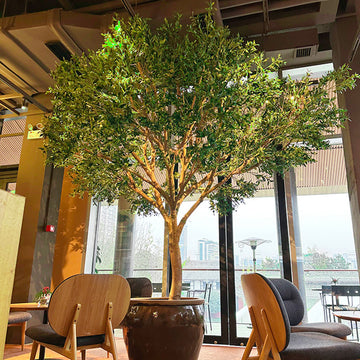
Dining area artificial plants for refined everyday moments
Dining area artificial plants bring an effortless sense of greenery and elegance to the place where people gather most. Whether you are styling a casual breakfast nook, a dramatic dining room, or a hospitality setting, carefully chosen faux greenery turns every meal into a more considered experience. FauxNatural’s collection of indoor artificial plants and trees is curated to complement modern interiors while feeling remarkably lifelike from every angle.
Designing your space with dining area artificial plants and trees
The right dining area artificial plants and trees can quietly anchor your entire room design. Consider how you use the space: intimate dinners, family gatherings, or large events all call for slightly different expressions of greenery.
For a clean, contemporary look, a single sculptural tree such as a faux olive or fiddle leaf can frame a dining table and draw the eye upward. Explore graceful, architectural options within FauxNatural’s dedicated selection of artificial olive trees to create that subtle focal point. In more relaxed interiors, layer...
Dining area artificial plants for refined everyday moments
Dining area artificial plants bring an effortless sense of greenery and elegance to the place where people gather most. Whether you are styling a casual breakfast nook, a dramatic dining room, or a hospitality setting, carefully chosen faux greenery turns every meal into a more considered experience. FauxNatural’s collection of indoor artificial plants and trees is curated to complement modern interiors while feeling remarkably lifelike from every angle.
Designing your space with dining area artificial plants and trees
The right dining area artificial plants and trees can quietly anchor your entire room design. Consider how you use the space: intimate dinners, family gatherings, or large events all call for slightly different expressions of greenery.
For a clean, contemporary look, a single sculptural tree such as a faux olive or fiddle leaf can frame a dining table and draw the eye upward. Explore graceful, architectural options within FauxNatural’s dedicated selection of artificial olive trees to create that subtle focal point. In more relaxed interiors, layered greenery works beautifully: a floor-standing tree in one corner, a delicate fern on a sideboard, and a compact succulent arrangement on the table itself. Each element adds texture, depth, and a sense of balance around your seating area.
Because these artificial plants for dining area styling hold their form, you can rely on consistent proportions, graceful silhouettes, and ideal fullness over time—perfect for designers and homeowners who value a polished, considered atmosphere every day.
Choosing artificial plants for dining area tabletops
The centerpiece is often the heart of the dining table. Faux plants for dining room tables should enhance conversation and sightlines without overwhelming the setting. Low-profile dining table area greenery such as succulents, compact ferns, or a small tabletop faux monstera brings soft color and texture while allowing guests to see one another comfortably.
When choosing elegant artificial plants for dining space table styling, consider:
- Height: Opt for low to medium-height arrangements for a relaxed, sociable feel. Very tall stems work best at the ends of the table or on a console rather than directly in the center.
- Shape: Rounded or slightly elongated arrangements echo the lines of most dining tables and runners. Asymmetrical pieces add modern character and can be especially striking on rectangular tables.
- Container style: Stone-look bowls, ceramic vessels, and tonal planters harmonize with tableware, cutlery, and textiles. A subtle base allows the greenery to stand out without distracting from place settings.
For everyday dining, a single refined arrangement can live in the middle of the table. For special occasions, pair your dining room artificial plants with candleholders or sculptural decor pieces to create a layered, atmospheric tablescape.
Statement plants for dining room corners and walls
Floor-standing statement plants for dining room spaces introduce scale and drama. A tall faux dining room tree near a window, in an empty corner, or beside a sideboard enhances the architecture of the room and visually anchors the furniture group. For generously proportioned dining rooms, explore sculptural silhouettes in the artificial trees collection to find a piece that resonates with your interior.
Artificial trees for dining room styling work especially well when their silhouette echoes your interior aesthetic. Slim, airy faux olive trees suit minimal, Mediterranean, and Scandinavian-inspired spaces. Fuller foliage, such as fiddle leaf figs, offers a bold, sculptural presence ideal for contemporary or eclectic rooms. Placing a pair of matching dining area artificial plants and trees on either side of a console or double doors creates a symmetrical, gallery-like impression.
Along the walls, decorative dining area plants such as potted ferns or trailing greenery on shelves soften hard surfaces and add a welcoming layer to cabinetry, bar trolleys, or open displays. This approach keeps the floor uncluttered while surrounding the dining table with subtle greenery from multiple angles.
Coordinating modern dining area plants with your interior style
Because the foliage and color tones of modern dining area plants remain consistent, you can plan your space with precision. Think of your dining room artificial plants as part of the broader palette of materials, colors, and forms.
- Modern and minimalist interiors: Choose sleek faux plants for dining room styling with clean lines and simple planters in matte black, white, or soft grey. Single-species arrangements, such as a pure olive tree or a solo monstera, emphasize clarity and calm.
- Classic and elegant spaces: Opt for fuller foliage, deep greens, and timeless forms. Decorative dining area plants in ceramic pots, stone-look containers, or woven baskets bring a refined, inviting character to traditional dining sets and upholstered chairs.
- Rustic and natural atmospheres: Combine soft, feathery greens such as ferns with textured pots and baskets. Dining table area greenery in muted earth tones complements wooden tables, linen textiles, and handcrafted tableware beautifully.
- Urban and eclectic rooms: Mix different silhouettes—tall faux dining room trees with compact succulents and sculptural leaves—to create a collected, curated look that reflects your personal style.
Repeating similar foliage or container finishes across the room helps your dining area artificial plants feel intentional and cohesive, rather than scattered.
Balancing scale and proportion in your dining space
When selecting artificial plants for dining area design, scale is as important as style. Larger rooms with generous ceilings can carry taller faux dining room trees and fuller arrangements, while compact spaces often benefit from slender silhouettes and carefully chosen focal points.
As a guide, a floor-standing tree typically works best when its highest leaves sit below ceiling level, leaving air and light above. For sideboards or consoles, choose dining room artificial plants that leave a margin of space between the top foliage and any artwork or mirrors. This creates a visually calm, balanced arrangement.
On the table itself, allow enough room around your dining table area greenery for serving pieces and stemware. A series of smaller potted plants spaced along the length of the table creates rhythm and movement, while a single central piece feels serene and sculptural.
Dining area artificial plants for homes, events, and commercial spaces
The versatility of dining area artificial plants and trees makes them equally suited to private homes, professional projects, and event settings. Interior designers and stylists can explore tailored selections such as artificial trees and plants for restaurants and cafés to ensure the dining experience feels immersive and cohesive across every table.
For events, dining table area greenery delivers instant atmosphere: rows of matching succulent bowls or fern arrangements create a considered, botanical theme that pairs seamlessly with table linens and glassware. In hospitality and commercial environments, faux dining room trees and decorative dining area plants offer an inviting background for guests throughout the day and evening, with no need to adjust for light levels or changing seasons.
Because these dining room artificial plants hold their shape and appearance, they are ideal for photoshoots, staged homes, and showroom settings where every detail is expected to look composed and elegant at all times.
Creating layered greenery with complementary pieces
A thoughtfully layered dining space rarely relies on a single plant. Instead, it combines several pieces in varying heights and textures. Begin with one or two statement plants for dining room corners or beside the table. Then, introduce a couple of mid-height decorative dining area plants on consoles, window sills, or shelves. Finally, complete the composition with subtle dining table area greenery for everyday use or special gatherings.
Mixing leaf shapes—broad, glossy leaves with delicate, fine foliage—adds visual interest without clutter. Keep your overall color palette harmonious by focusing on a family of greens and choosing containers that echo your dining chairs, table finish, or lighting fixtures. The result is a space that feels calm, curated, and effortlessly welcoming, from casual breakfasts to candlelit dinners.
FAQ about dining area artificial plants
How do I choose dining area artificial plants that suit my interior style?
Select dining area artificial plants that echo the colors, materials, and lines already present in your dining furniture and lighting. For a contemporary look, choose modern dining area plants with clean silhouettes. Traditional interiors often pair well with fuller, leafy decorative dining area plants. Consider the visual balance between plant height, table size, and surrounding décor.
What size dining area artificial plants and trees work best around a dining table?
Low to medium-height artificial plants for dining area use are suitable for tabletops so they do not block sightlines. Taller faux dining room trees or artificial trees for dining room corners can frame the space without crowding it. Ensure there is enough room for chairs to move freely. Measure floor and table dimensions before selecting statement plants for dining room layouts.
Where should I place faux plants for dining room spaces for the best visual impact?
Position dining room artificial plants in corners, beside storage units, or near windows to create defined zones. Use dining table area greenery in the center of the table or along the middle of longer tables. Larger faux dining room trees can be placed near walls to anchor the room. Avoid placing plants where they obstruct movement around the table.
Are dining area artificial plants suitable for low-light dining rooms?
Dining area artificial plants and trees are suitable for both bright and low-light dining rooms because they do not depend on natural light. This makes them appropriate for interior spaces with small windows or evening-focused use. You can select elegant artificial plants for dining space designs even in windowless areas. Light level will only influence how the foliage appears, not its condition.
How can I use artificial plants for dining area zoning in open-plan spaces?
Place modern dining area plants or faux dining room trees at the edge of the dining zone to visually separate it from living or kitchen areas. Group decorative dining area plants of varying heights near the table to define the boundary. A row of dining room artificial plants along a console or sideboard can reinforce the dining area as a distinct section. Ensure pathways between zones remain clear.
What types of dining area artificial plants work well for centerpieces?
Compact decorative dining area plants are suitable as centerpieces because they leave space for table settings. Dining table area greenery such as low arrangements or narrow linear designs works well on rectangular tables. Statement plants for dining room centerpieces can be used if they remain below eye level when seated. Coordinate foliage shape and color with tableware for a cohesive arrangement.