Artificial trees for staircases that elevate every transition
Artificial trees for staircases offer a refined way to bring sculptural greenery into one of the most architectural areas of a home or commercial interior. Whether you are styling a dramatic stairwell, a connecting hallway, or an airy landing, these indoor faux trees introduce vertical interest, texture, and softness exactly where it matters most. Curated specifically for stairwells and transitional spaces, this collection is designed to complement movement and flow, guiding the eye as you move from one level or room to the next.
From tall artificial trees for stairwells that fill double-height voids to slim silhouettes that sit gracefully on a landing, each piece is created to feel as natural and intentional as the staircase itself. For interior designers, event stylists, hoteliers, and home décor enthusiasts, this category offers a selection of realistic artificial trees indoor that brings a sense of calm elegance to every step.
Why artificial greenery for transitional spaces works beautifully
Staircases, corridors, and room transitions are often where architectural lines are stro...
Artificial trees for staircases that elevate every transition
Artificial trees for staircases offer a refined way to bring sculptural greenery into one of the most architectural areas of a home or commercial interior. Whether you are styling a dramatic stairwell, a connecting hallway, or an airy landing, these indoor faux trees introduce vertical interest, texture, and softness exactly where it matters most. Curated specifically for stairwells and transitional spaces, this collection is designed to complement movement and flow, guiding the eye as you move from one level or room to the next.
From tall artificial trees for stairwells that fill double-height voids to slim silhouettes that sit gracefully on a landing, each piece is created to feel as natural and intentional as the staircase itself. For interior designers, event stylists, hoteliers, and home décor enthusiasts, this category offers a selection of realistic artificial trees indoor that brings a sense of calm elegance to every step.
Why artificial greenery for transitional spaces works beautifully
Staircases, corridors, and room transitions are often where architectural lines are strongest but décor can feel overlooked. Artificial greenery for transitional spaces is an effortless way to soften these lines and introduce a sense of continuity between different zones. Because these areas can be challenging for live plants—from uneven light to limited access—high-quality indoor faux trees for architectural spaces become a natural choice.
With carefully detailed trunks, nuanced leaf tones, and thoughtfully chosen planters, these staircase decor artificial trees look composed from every angle, including from above and below. They frame vistas, draw attention to design details such as bannisters or wall art, and create a gentle rhythm as you move through the space. For hospitality venues and offices, they bring an inviting, welcoming feel right into circulation zones and elevator approaches.
Design directions: staircase decor artificial trees for every style
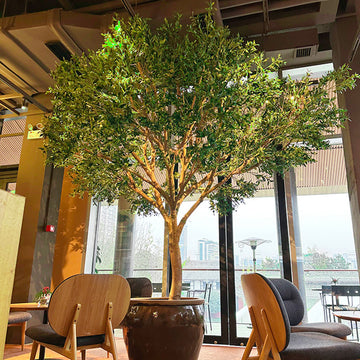
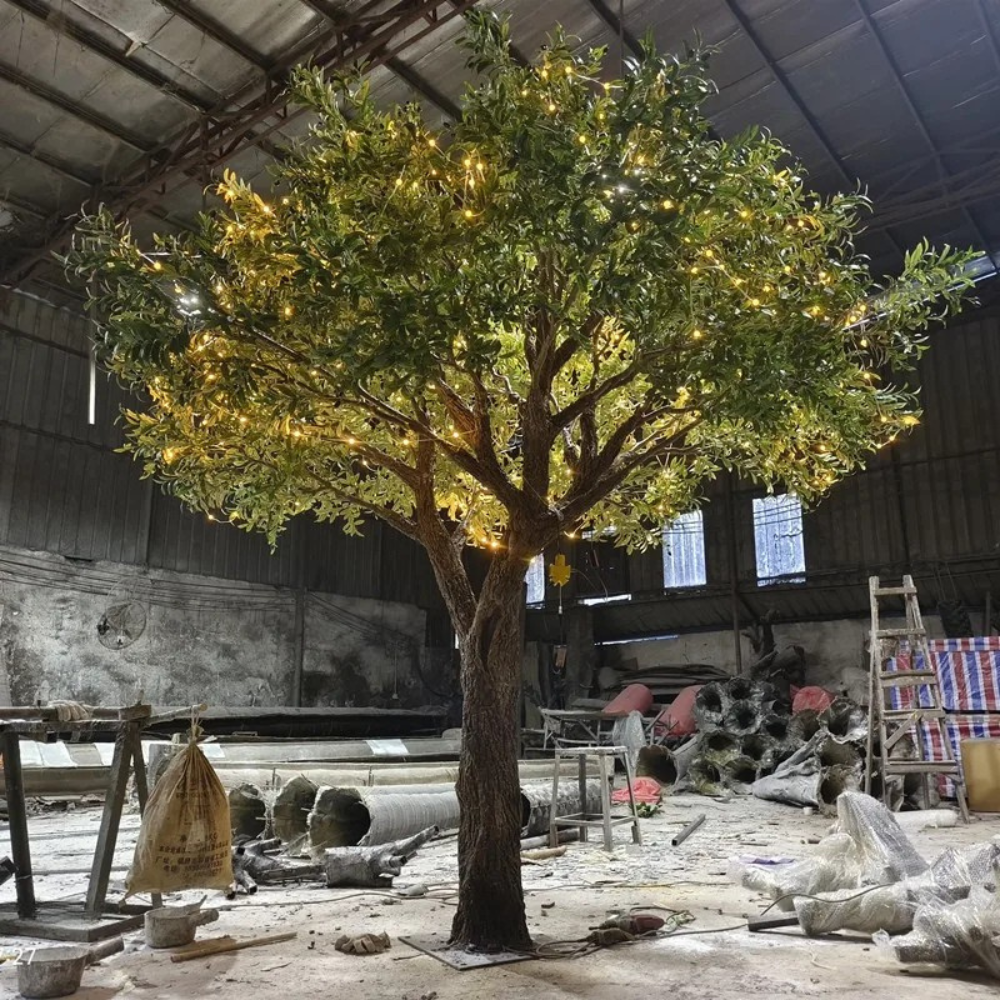
The collection of artificial trees for staircases includes a range of botanical styles and silhouettes, making it simple to tailor your greenery to the character of your interior. For a serene, Mediterranean-inspired mood, an artificial olive tree or artificial black olive tree offers slender branches, delicate foliage, and a graceful upward movement that suits both open stairwells and narrow landings. Their gentle volume works beautifully beside railings or at the turn of a staircase where you want height without visual heaviness.
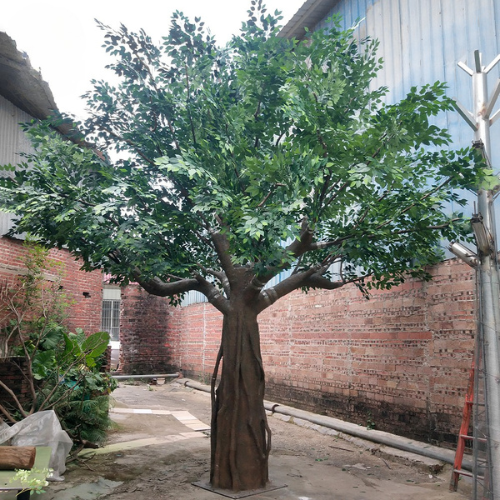
If you prefer lush, sculptural leaves, a faux fiddle leaf fig becomes a natural focal point. Its broad foliage and elegant structure make it a favorite among designers for modern staircase greenery ideas, especially in contemporary homes, hotels, and show apartments. On a larger landing or gallery-style corridor, a faux monstera or Swiss cheese plant introduces an urban, curated feel, with its split leaves playing beautifully against clean lines, statement lighting, or textured walls.
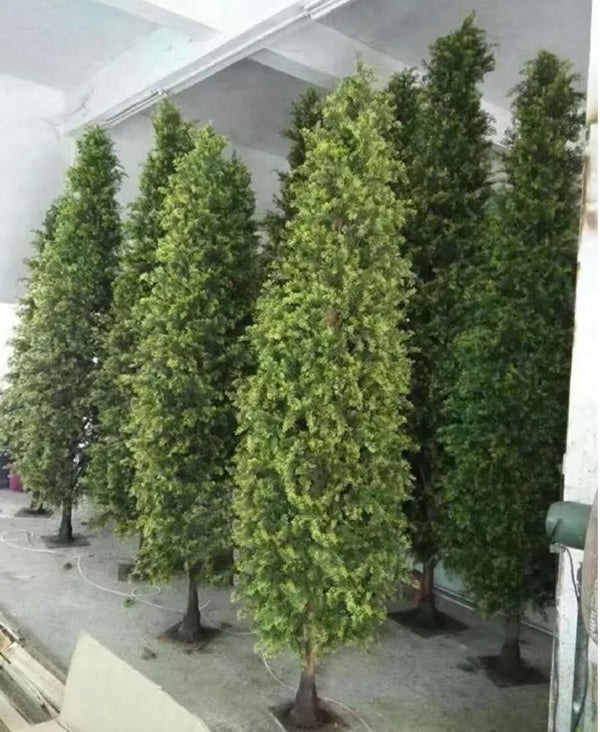
For more formal or classic spaces, decorative trees for hallways such as artificial boxwood topiary or spiral designs offer a tailored look. Their sculpted forms are perfect for flanking the base or top of a staircase, lining a wide corridor, or defining the entrance to a secondary stair. These statement trees for staircases work particularly well in symmetrical layouts, where they can echo architectural balance and create a sense of grandeur.
Choosing tall artificial trees for stairwells and double-height spaces
Stairwells and voids often feature generous ceiling heights that call for equally striking vertical décor. Tall artificial trees for stairwells are crafted to meet this challenge, introducing scale and drama without overwhelming the space. When selecting a taller piece, start with ceiling height and sightlines. In double-height areas, a tree that reaches into the upper third of the volume tends to feel proportionate and visually grounded.
Consider how the tree will be viewed from multiple levels: from the lower floor looking up, from the stairs themselves, and from the upper floor looking down. A slender artificial olive tree or black olive design is excellent when you want height but need to keep floor space relatively open. For grand staircases with generous width, a fuller faux fiddle leaf fig or lush monstera can occupy the void and create a striking, gallery-like moment.
In commercial or hospitality settings, placing tall artificial trees for stairwells near landings, glass balustrades, or atrium windows can create layered views and photogenic backdrops, perfect for lounges, lobby staircases, or mezzanine connections.
Decorative trees for hallways, landings, and connective spaces
Transition zones such as hallways, mezzanines, and upper-floor corridors are ideal locations for decorative trees for hallways. They help define otherwise linear spaces, breaking up long sightlines and adding a sense of rhythm. A pair of boxwood topiary trees can anchor either end of a corridor, while a single artificial tree placed midway along a wall can create a small moment of calm between rooms.
For entry halls and connecting foyers, artificial plants for entry transitions can bridge the language between the main living spaces and the staircase. A sleek olive tree in a minimalist planter might echo the styling of the living room, while a sculpted topiary signals a more formal dining area beyond. In family homes and boutique hotels alike, this subtle continuity allows each level to feel connected by a common thread of greenery.
Planters, proportions, and placement along staircases
The planters that accompany many artificial trees for staircases are carefully chosen to suit a range of interior styles, from minimalist ceramics to more substantial contemporary designs. When selecting a tree, consider not just the foliage but the base: a streamlined planter is ideal where floor area is limited or where you want the tree to read as a subtle accent, while a more sculptural planter can act as a design feature in its own right.
Placement along the staircase is equally important. On smaller landings or at mid-level turns, look for slim profiles that offer height without obstructing movement. For the base of a staircase, a fuller canopy or statement tree can mark the transition from one room to another, functioning almost like a living sculpture. At the top of the stairs, a tree can soften the corner where circulation meets bedroom corridors, creating a visual pause before you move into more private spaces.
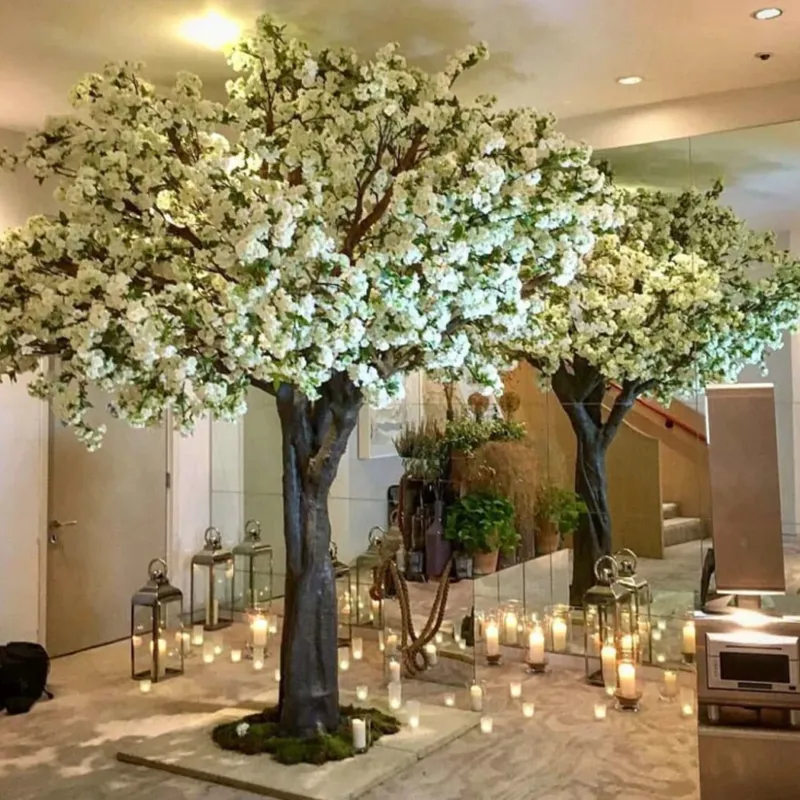
In commercial and event contexts, grouping two or three coordinated indoor faux trees for architectural spaces can define a zone without physical barriers, ideal for guiding guests intuitively along circulation routes or framing key viewpoints.
Creating cohesive modern staircase greenery ideas
Modern staircase greenery ideas often revolve around clean lines, curated color palettes, and a sense of calm luxury. To achieve a cohesive look, echo shapes and tones already present in your interior. The fine, airy foliage of an artificial olive tree works beautifully alongside slim metal balustrades or pale timber treads, while the bold, glossy leaves of a faux fiddle leaf fig or monstera complement larger-scale artwork, sculptural lighting, or generous windows.
Repeat elements subtly as you move through the space. A staircase-level tree might be accompanied by a smaller coordinating piece at the entry, or by a matching variety in an adjacent living area. Decorative trees for hallways that echo stairwell greenery help create a continuous, curated story from one level to the next. For event planners and stylists, aligning artificial trees for staircases with table styling, textiles, and floral arrangements results in a complete visual experience that feels intentional and immersive.
How to select the right realistic artificial trees indoor
When choosing realistic artificial trees indoor for staircases and transitional zones, start with three essentials: height, footprint, and style. Measure the available vertical and horizontal space, including bannister overhangs, corners, and door swings. A tree should feel generous but never intrusive. For narrow stairs or compact corridors, a tall, slim profile is ideal. For wider landings or open gallery spaces, a fuller canopy can provide balance.
Next, consider the overall mood you want to create. For understated elegance, an olive or black olive tree offers gentle movement and refined texture. For expressive, design-forward interiors, a fiddle leaf fig or monstera adds an artistic, editorial touch. Topiary and spiral forms introduce structure and formality, particularly suited to classic homes, grand entrances, and boutique hospitality spaces.
Finally, look closely at planter style and finish. Coordinate with existing materials: think of stair treads, handrails, flooring, and wall color. A monochrome planter can harmonize with minimalist schemes, while a textured or warm-toned base can soften more angular, contemporary architecture. The interplay of foliage, trunk detail, planter design, and placement transforms each piece from simple décor into a considered part of your interior composition.
Thoughtfully placed artificial trees for staircases, transitional spaces, and entry connections enrich the journey between rooms and levels, making every ascent and descent feel more curated, welcoming, and beautifully green.
FAQ about artificial trees for staircases
How do I choose artificial trees for staircases that fit my space?
Measure the height and width of your stairwell or landing to determine the maximum tree size. Consider whether you need tall artificial trees for stairwells, compact floor plants, or slim-profile designs. Match the style of the tree with existing finishes, such as railings, flooring, and wall colors. Check that the base fits securely on steps, landings, or corners without obstructing movement.
What size artificial trees for staircases work best in narrow stairwells?
In narrow stairwells, select tall artificial trees for stairwells with a slim canopy and a compact base. Heights that reach above the handrail often emphasize vertical lines without crowding the walkway. Place them on landings or recessed areas to maintain clear circulation. Avoid overly wide decorative trees for hallways in tight corners where doors or steps need full clearance.
How can I use artificial greenery for transitional spaces between rooms?
Artificial greenery for transitional spaces works well along corridors, at the base of stairs, and near entry thresholds. Use indoor faux trees for architectural spaces to define zones and guide movement from one area to another. Combine statement trees for staircases with smaller artificial plants for entry transitions for visual continuity. Keep sightlines open so the greenery complements, rather than blocks, architectural features.
What are suitable modern staircase greenery ideas for contemporary interiors?
Modern staircase greenery ideas often focus on clean silhouettes and minimal color variation. Choose realistic artificial trees indoor with simple trunks and refined foliage styles. Pair one or two statement trees for staircases with neutral planters that echo metal, glass, or concrete elements. Repeating similar tree forms on different levels can create a consistent, structured look.
Where should decorative trees for hallways be placed near stairs?
Position decorative trees for hallways at the start or end of the staircase to frame the route. Place artificial plants for entry transitions near doorways to create a clear visual anchor. In longer corridors, space indoor faux trees for architectural spaces at intervals to avoid crowding. Ensure there is adequate walking width and that doors and drawers open freely around the tree bases.