Artificial trees for open plan interiors that shape space with ease
Artificial trees for open plan interiors create structure, intimacy, and visual calm in even the most expansive layouts. Whether you are refining a contemporary family living space, curating a hospitality environment, or defining zones within a flexible office, this carefully curated collection brings sculptural greenery into large rooms without interrupting the flow of light and sightlines. Each tree is designed to feel as convincing as a living specimen while complementing modern architecture, refined furnishings, and considered styling.
Designing open layouts with intentional greenery
Open-plan interiors invite connection and fluid movement, yet they can sometimes feel undefined or echoing. Thoughtfully placed decorative artificial trees indoor introduce a sense of scale and softness, helping each area of an open space feel purposeful. Tall silhouettes and layered foliage provide a gentle backdrop for conversation, while slender, airy varieties suggest separation without ever feeling heavy or closed off.
This collection of artificial trees for large interiors supports both subtle and dramatic gestures. Use a single, statuesque tree as a focal point at the end of a si...
Artificial trees for open plan interiors that shape space with ease
Artificial trees for open plan interiors create structure, intimacy, and visual calm in even the most expansive layouts. Whether you are refining a contemporary family living space, curating a hospitality environment, or defining zones within a flexible office, this carefully curated collection brings sculptural greenery into large rooms without interrupting the flow of light and sightlines. Each tree is designed to feel as convincing as a living specimen while complementing modern architecture, refined furnishings, and considered styling.
Designing open layouts with intentional greenery
Open-plan interiors invite connection and fluid movement, yet they can sometimes feel undefined or echoing. Thoughtfully placed decorative artificial trees indoor introduce a sense of scale and softness, helping each area of an open space feel purposeful. Tall silhouettes and layered foliage provide a gentle backdrop for conversation, while slender, airy varieties suggest separation without ever feeling heavy or closed off.
This collection of artificial trees for large interiors supports both subtle and dramatic gestures. Use a single, statuesque tree as a focal point at the end of a sightline, or compose a small grove to anchor a lounge, dining, or reception area. With consistent color, form, and texture throughout the range, it becomes effortless to extend a unified design language from one zone to the next.
Creating natural zoning in open spaces
Zoning spaces with artificial trees is a refined alternative to building partitions or relying solely on furniture placement. Large indoor artificial trees can sit between a seating area and a dining table, around a reading corner, or between collaborative and quiet work zones in a corporate interior. Their vertical presence subtly suggests boundaries, yet their organic shapes keep the room feeling generous and welcoming.
Slender trunks and layered canopies are particularly effective for open concept interior greenery where views and circulation must remain clear. Place an elegant row of bamboo or bay leaf trees along the edge of a corridor to guide movement, or flank an informal meeting nook with taller varieties for a cocooning effect. The result is an interior that feels both open and thoughtfully curated, where each area is clearly defined yet visually connected.
Olive trees: Mediterranean elegance for contemporary layouts
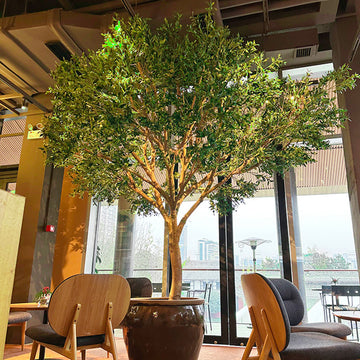
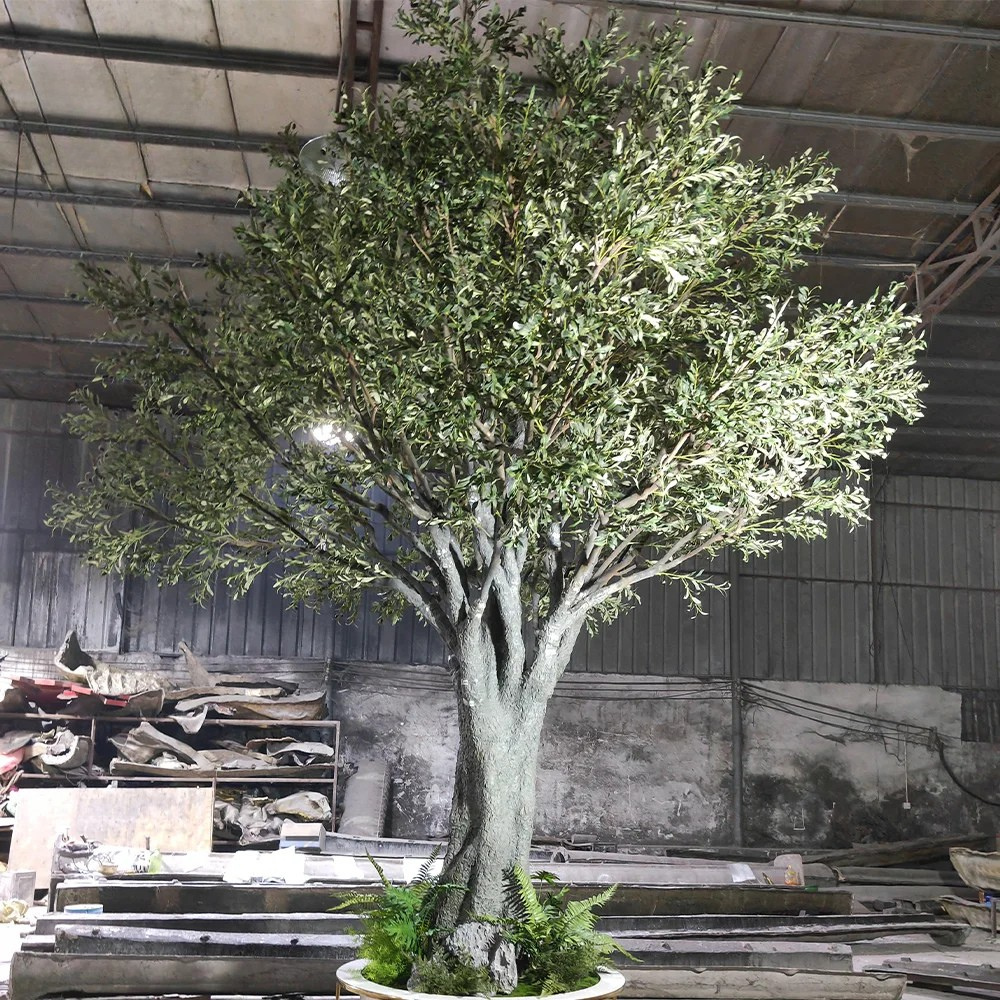
Artificial olive trees bring a distinctly modern, European sensibility to open-plan interiors. Their fine, silvery foliage and graceful branching create a light, airy presence that works beautifully next to floor-to-ceiling windows, minimalist furniture, and neutral palettes. Because the forms are naturally sparse and sculptural, they complement both understated and richly layered decor.
In a large living room, an olive tree can anchor a reading chair or frame a console table without overwhelming the view. In lobbies and open offices, taller olives define relaxed collaboration zones while maintaining an open, communicative atmosphere. As statement trees for open layouts, they offer a quiet sophistication that pairs equally well with stone, wood, and soft textiles.
Fiddle leaf figs: bold silhouettes with sculptural impact
Faux fiddle leaf fig trees are ideal when the space calls for a strong, sculptural element. Their broad, glossy leaves and upright forms give them a commanding presence, making them perfect as statement trees for open layouts where impactful silhouettes are essential. Positioned in a corner, by a staircase, or alongside large artwork, they instantly draw the eye and help to visually organize the room.
For home decorators and interior professionals, these realistic artificial trees interiors are especially effective in double-height rooms, wide hallways, and expansive lounges. Cluster different heights together in a generous foyer to underscore the vertical volume, or use a single tall fig to balance a large sectional sofa or elongated dining table in an open-plan living area. Explore the dedicated selection of these sculptural trees in the artificial fiddle leaf fig trees collection.
Palm trees: softening lines and framing relaxation zones
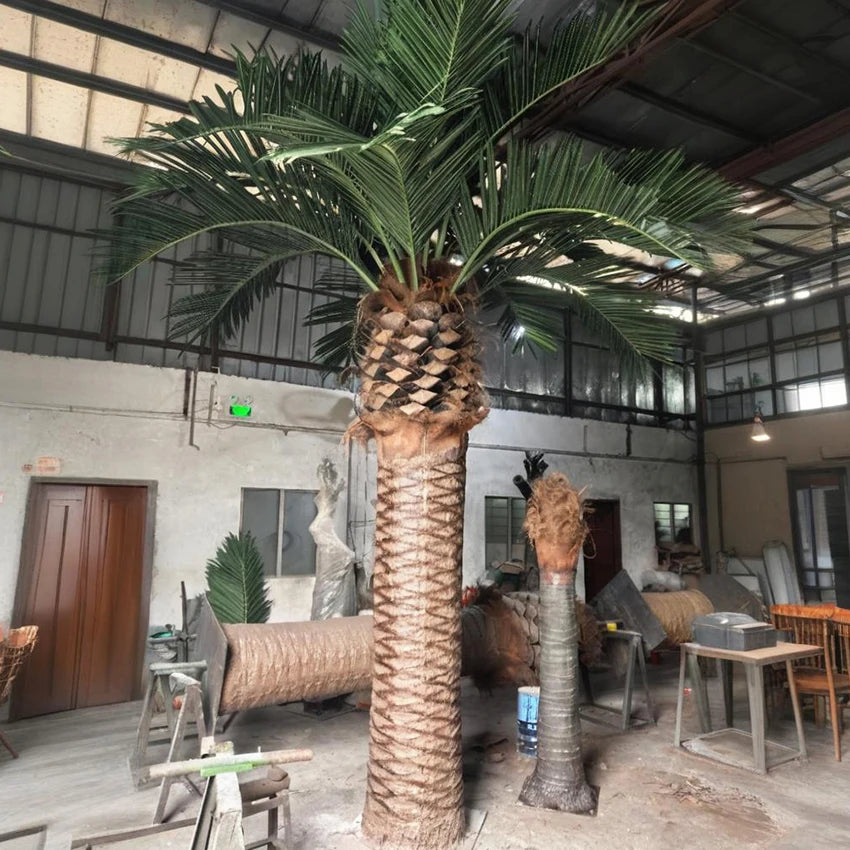
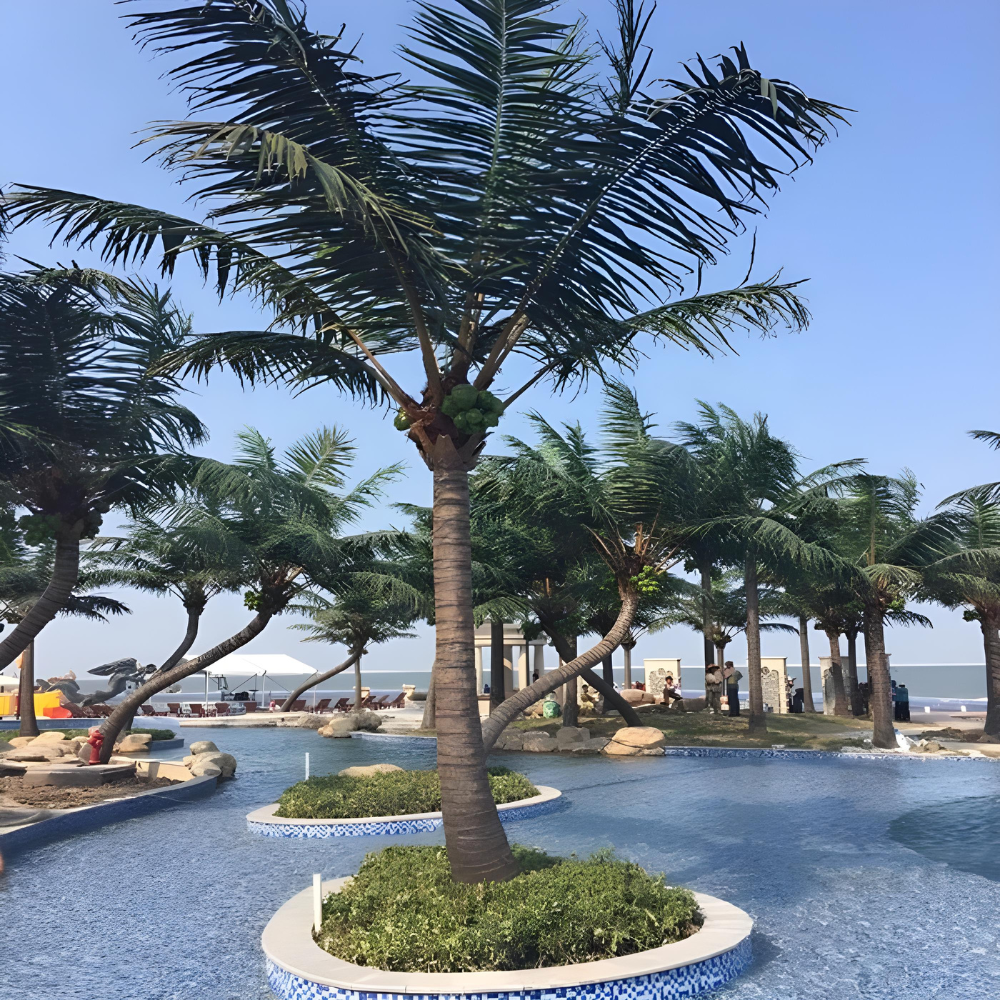
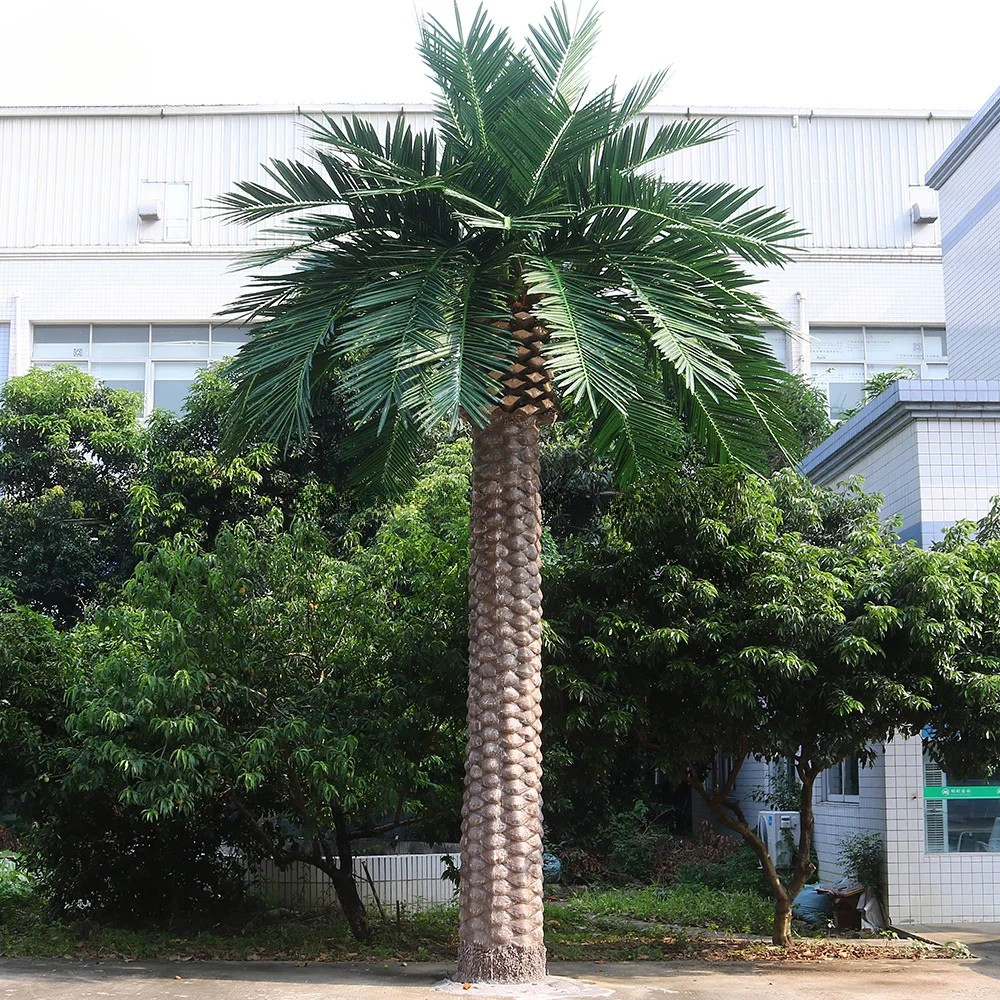
Artificial palm trees introduce a sense of ease and escape to modern open plan decor plants schemes. Their arching fronds and layered foliage soften the rectilinear lines of architecture, glazing, and cabinetry, lending a relaxed, resort-inspired mood to living spaces, hotel lounges, spa receptions, and coworking breakouts.
Place one palm tree beside a chaise or armchair to create a quiet retreat within a larger room, or arrange a pair to frame a lounge grouping in a hospitality setting. Their height and fullness make them particularly well suited as artificial greenery for open spaces where you want to gently enclose a zone without blocking natural light or key sightlines across the room.
Monstera and Areca trees: bold, architectural greenery
Faux Monstera and Areca trees bring an architectural character to large interiors. Iconic split leaves, pronounced stems, and dynamic silhouettes activate otherwise restrained, neutral environments. They pair beautifully with monochrome palettes, concrete floors, and understated furniture, where their strong shapes become part of the overall composition.
In open-plan homes and contemporary offices, these decorative artificial trees indoor can be used singly as sculptural accents beside media units, bar areas, or shelving, or grouped in threes to form a lush, vertical focal point. Placed along a wall of glass or behind a sofa, they create a layered, “green wall” effect that enriches the depth and texture of the space.
Bamboo and bay leaf trees: light, airy partitioning
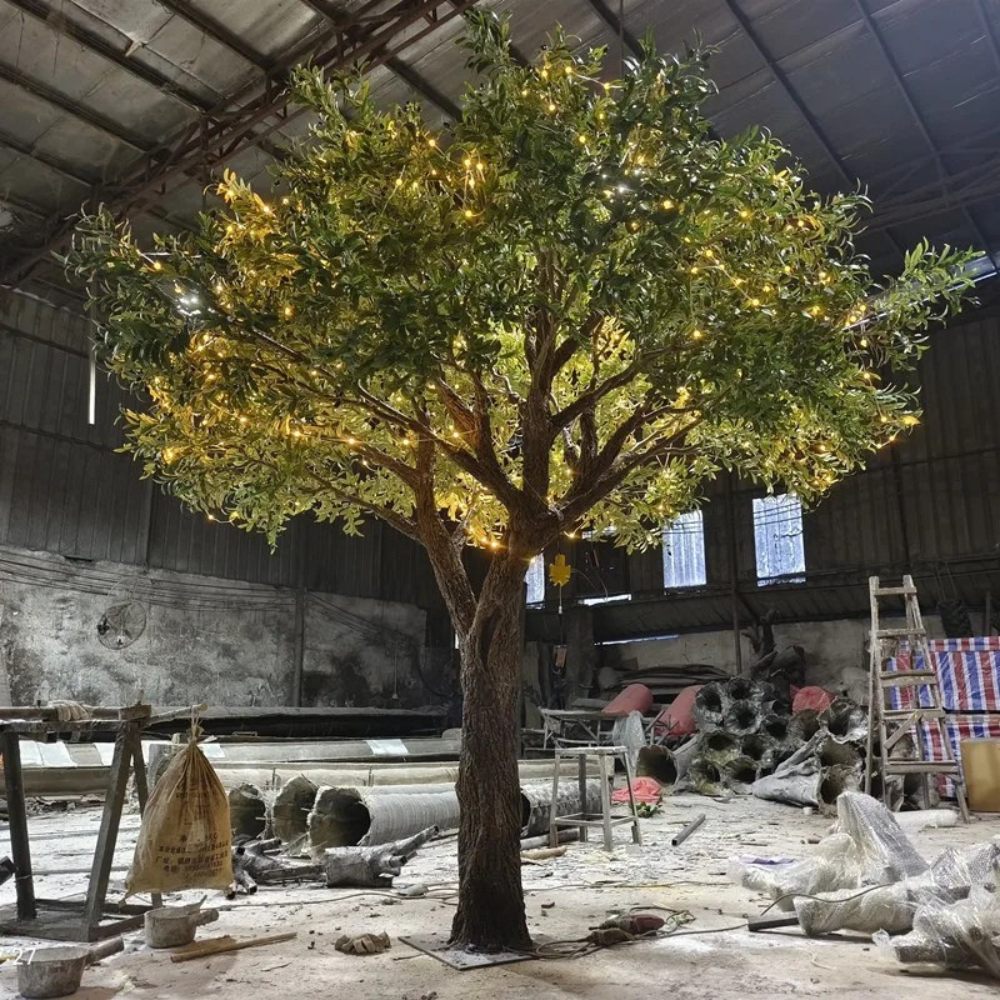
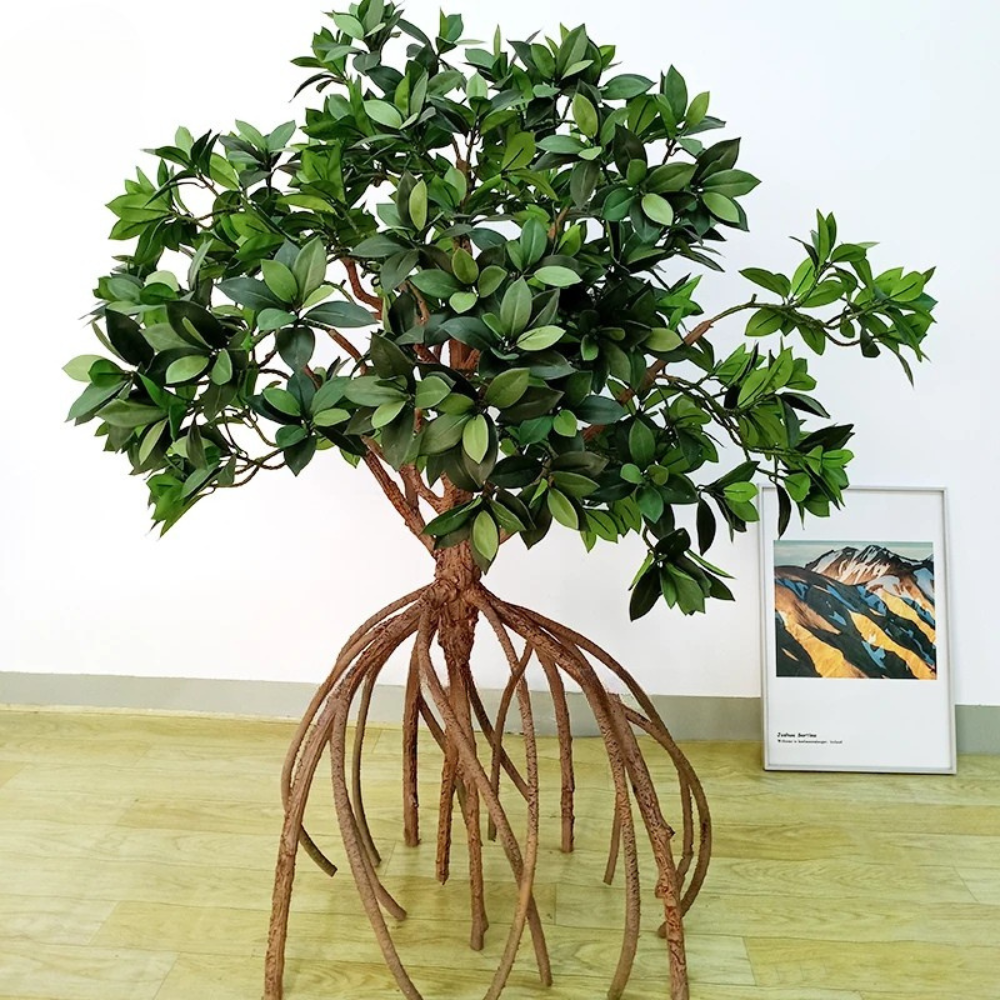
Artificial bamboo and bay leaf trees are ideal for zoning spaces with artificial trees when a light touch is required. Their multiple slender trunks and fine foliage create an elegant, semi-transparent screen that allows light to pass freely while gently suggesting privacy. This makes them exceptionally suited to flexible workplaces, dining areas, and reception lounges where visual connection matters.
Line several bamboo trees in a row to outline a quiet focus area within an open office, or position bay leaf trees around a dining table in an open-plan kitchen-living room to give the dining zone a sense of its own identity. The effect is subtle yet assured, lending structure without feeling solid or enclosed.
Realistic detailing for refined interiors
The collection of artificial trees for open plan interiors is crafted with a focus on authenticity and refinement. Textured trunks, nuanced leaf coloration, and carefully composed canopies contribute to a lifelike presence that enhances rather than competes with your broader design choices. These realistic artificial trees interiors are conceived as integral design elements, on par with lighting, artwork, and furniture.
The trees are thoughtfully scaled for large rooms, with options ranging from modest accent heights to dramatic, tall specimens that hold their own in double-height spaces or atriums. Many pieces are supplied in a simple, understated base that can be placed inside a vessel of your choice, allowing perfect alignment with your material palette—whether that is a sleek cylindrical planter, a sculptural stone vessel, or a woven basket to introduce natural texture.
Flexible styling for homes, events, and commercial interiors
Artificial trees for large interiors are especially valuable where layouts and functions evolve over time. As needs change, a tree that once defined a lounge can be repositioned to frame a new reception desk or to introduce intimacy to an additional seating area. This flexibility is particularly appealing to event planners and commercial designers, who frequently adapt spaces for different occasions and guest flows.
For events and styled gatherings, large indoor artificial trees can be grouped along entrances, positioned at stage edges, or arranged to frame key photo moments. In hospitality or retail environments, they soften transitions between zones and create a consistent ambiance throughout expansive floorplates. In residences, moving a tree from dining area to reading nook or from office corner to bedroom allows the greenery to accompany each new design chapter.
Calm, biophilic atmospheres made effortless
Open concept interior greenery contributes to calmer, more welcoming environments, especially in spaces where people gather, collaborate, or unwind. Even in interiors without access to natural planting conditions, artificial greenery for open spaces still offers the visual cues associated with nature—organic forms, layered textures, and gentle variations of green.
Whether you are elevating a contemporary loft, designing a tranquil spa, planning a multi-zone event, or shaping a fluid workspace, artificial trees for open plan interiors bring a sense of serenity and cohesion. From delicate olive branches to dramatic fiddle leaf figs, from tropical palms to architectural monsteras and refined bamboo, each piece is conceived to integrate seamlessly into sophisticated schemes and to enrich the experience of every open, light-filled room.
FAQ about artificial trees for open plan interiors
How do I choose artificial trees for open plan interiors with high ceilings?
Select large indoor artificial trees that maintain visual proportion with the ceiling height and surrounding furniture. In double-height spaces, statement trees for open layouts typically look balanced when they reach at least one-third to one-half of the wall height. Check that the canopy width fits circulation routes without blocking pathways. Use a consistent foliage style to keep the open concept interior greenery cohesive.
Can artificial trees for open plan interiors help zone different areas?
Yes, zoning spaces with artificial trees is a practical way to define dining, lounge, and work zones in one continuous room. Taller decorative artificial trees indoor can act as soft partitions without fully blocking light or sightlines. Placing two or three trees in a line creates a visual boundary between functions. This approach keeps artificial greenery for open spaces organized and legible.
What styles of artificial trees work best with modern open plan decor plants?
Clean-lined, minimal tree forms pair well with modern open plan decor plants. Look for realistic artificial trees interiors with simple trunks and structured canopies that echo contemporary furniture. Monochrome or neutral planters help maintain a streamlined look. Avoid mixing too many foliage types in one sightline to prevent visual clutter.
Where should I place artificial trees for large interiors to create impact?
Position statement trees for open layouts at natural focal points such as room junctions, seating clusters, or architectural features. In expansive rooms, placing large indoor artificial trees near columns or corners can anchor the layout. Grouping trees in odd numbers can create a stronger visual presence than single pieces. Ensure sightlines remain clear across the open space.
How many decorative artificial trees indoor are suitable for an open concept living area?
The number depends on floor area, ceiling height, and existing furniture volumes. In many open plan interiors, one or two larger artificial trees for open plan interiors combined with smaller modern open plan decor plants provide enough greenery. Distribute them across different zones instead of clustering all in one corner. Maintain adequate space around each piece so the open layout still feels expansive.