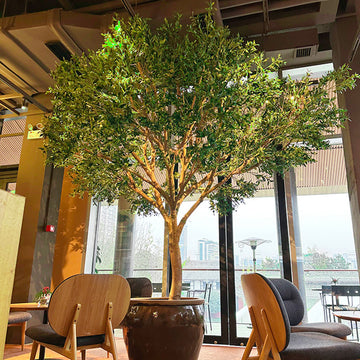
Artificial trees for entryways that define the first impression
Artificial trees for entryways shape how guests, clients, and residents experience a space from the very first step indoors. A thoughtfully placed tree frames the entrance, softens architectural lines, and brings a sense of calm and refinement to lobbies, corridors, and reception areas. This collection of artificial trees for entryways is curated for those who value design impact, consistent elegance, and a welcoming atmosphere in both private homes and professional environments.
Whether you are styling a boutique hotel lobby, a corporate reception area, a luxury apartment entrance, or your own home hallway, these reception area artificial trees deliver presence and character without depending on daylight or maintenance. From tall, sculptural silhouettes to softly textured foliage, every tree is crafted to look convincingly natural and to perform beautifully in high-traffic spaces.
Reception area artificial trees for refined, professional spaces
In reception areas, greenery does more than decorate; it sets the tone for the entire interior. Realistic artificial trees reception areas can rely on are especially valuable where first impressions must be consistently elevated throughout the day, wee...
Artificial trees for entryways that define the first impression
Artificial trees for entryways shape how guests, clients, and residents experience a space from the very first step indoors. A thoughtfully placed tree frames the entrance, softens architectural lines, and brings a sense of calm and refinement to lobbies, corridors, and reception areas. This collection of artificial trees for entryways is curated for those who value design impact, consistent elegance, and a welcoming atmosphere in both private homes and professional environments.
Whether you are styling a boutique hotel lobby, a corporate reception area, a luxury apartment entrance, or your own home hallway, these reception area artificial trees deliver presence and character without depending on daylight or maintenance. From tall, sculptural silhouettes to softly textured foliage, every tree is crafted to look convincingly natural and to perform beautifully in high-traffic spaces.
Reception area artificial trees for refined, professional spaces
In reception areas, greenery does more than decorate; it sets the tone for the entire interior. Realistic artificial trees reception areas can rely on are especially valuable where first impressions must be consistently elevated throughout the day, week, and season. With premium materials and lifelike detailing, these trees create a sense of hospitality and calm that aligns with curated interiors and professional styling standards.
Consider statement trees for lobbies that anchor a seating zone, punctuate a corridor, or flank a reception desk. A tall artificial olive tree, for example, suits contemporary offices and design-led hotels with its slender trunk and airy foliage. An artificial ficus tree, with its fuller canopy, brings volume and a sense of lush greenery to larger foyers, medical waiting areas, or retail entrances, while still feeling polished and composed. Each style supports different interior narratives, from understated minimalism to warm, layered luxury.
Lobby artificial greenery to suit every interior style
Lobby artificial greenery should harmonize with architecture, finishes, and furnishings. This collection spans a wide aesthetic spectrum, allowing designers and home décor enthusiasts to select decorative entryway trees artificial that feel tailored to their project.
For clean-lined, contemporary interiors, a faux fiddle leaf fig tree offers bold, sculptural leaves that pair beautifully with modern furniture, polished concrete, and monochrome palettes. In more tranquil or Asian-inspired reception spaces, an artificial bamboo tree introduces vertical rhythm and elegant lightness, ideal where you want height without visual heaviness.
For hospitality settings and resort-style lobbies, faux palm trees add a subtle sense of escape and warmth, complementing stone floors, soft textiles, and curated lighting. Residential lobbies and upscale home entryways can benefit from the quiet elegance of an artificial olive tree or a finely detailed ficus, especially where a more understated, timeless aesthetic is preferred.
Commercial entryway greenery that performs in high-traffic areas
Commercial entryway greenery must be as resilient as it is beautiful. These artificial trees for reception areas are created with commercial-grade quality in mind, making them well suited to hotels, corporate offices, medical facilities, and retail environments. Dense foliage, naturalistic trunks, and carefully chosen materials help maintain a sophisticated appearance even under constant use and movement around the pieces.
Because the trees do not rely on light or watering, they are ideal for shaded vestibules, internal corridors, deep lobbies, or glass-front entrances where climate control can be challenging. Their appearance remains steady and composed, keeping the visual story of your entry exactly as envisioned throughout the year, from early morning openings to late-night arrivals.
Decorative entryway trees artificial: choosing height, shape, and placement
Selecting the right decorative entryway trees artificial begins with understanding the architecture and flow of your space. Height, canopy spread, and positioning all work together to guide the eye and support movement through the entrance.
For compact foyers and narrow hallways, a tall artificial olive tree or slender artificial bamboo tree introduces impressive height without occupying excessive floor area. The trunks are visually light, allowing surrounding surfaces and furniture to remain prominent while still enjoying the warmth of greenery. In larger lobbies or double-height spaces, pairs of luxury lobby artificial trees can frame doorways, reception desks, or key sightlines, reinforcing symmetry and grandeur.
Consider these simple principles when positioning your trees:
- Place taller silhouettes near architectural features, such as columns or staircases, to soften hard edges.
- Use a pair of trees to flank an entrance, reception desk, or seating area for a sense of balance and ceremony.
- Allow enough circulation space around each tree so guests can pass comfortably and the tree can be appreciated as a design element, not an obstacle.
- Vary heights and species within larger lobbies to create layered, dynamic compositions while staying within a cohesive style palette.
Office reception artificial plants for a welcoming work environment
Office reception artificial plants have a unique role in workplace design. They signal care, attention to detail, and a thoughtful approach to employee and client experience. An artificial ficus tree or faux fiddle leaf fig in the reception lounge adds softness to clean-lined furniture and technology-led spaces, creating a more inviting environment for meetings, waiting areas, and informal conversations.
In corporate headquarters or creative studios, reception area artificial trees can also help zone areas within an open-plan lobby—subtly dividing waiting areas from circulation paths, or delineating a lounge from a presentation space. For co-working environments and design studios, mixing tall lobby artificial greenery with smaller accent pieces forms a unified, green backdrop that supports focus and creativity without overwhelming the interior concept.
Luxury lobby artificial trees for elevated residential and hospitality spaces
Luxury lobby artificial trees offer an elegant solution for curated residential entrances and hospitality projects where consistency and refinement are essential. In high-end apartment buildings, a pair of sculptural olive or ficus trees in the main lobby helps define the building’s identity and complements high-quality finishes, statement lighting, and art.
In boutique hotels and upscale resorts, combining faux palm trees with other commercial entryway greenery can echo the destination’s landscape and atmosphere. Tall palms by the entrance, a graceful bamboo tree in a quiet corner, and a fiddle leaf fig anchoring a lounge space create a layered composition that feels both intentional and relaxed. Each tree adds to the sense of arrival that distinguishes a memorable property.
Realistic artificial trees reception areas can rely on, year after year
The realism of these artificial trees for entryways is central to their effect. Carefully shaded foliage, naturalistic branching, and authentic trunk textures all contribute to a convincing presence that harmonizes with high-end interiors. Whether guests are stepping into a serene spa lobby, a vibrant retail store, or a private townhouse, realistic artificial trees reception areas rely on help maintain a sense of authenticity and calm.
Because these pieces are designed for long-term use, they are also a practical choice for designers and commercial buyers who need dependable, long-lasting lobby artificial greenery for ongoing projects. The visual story stays consistent, supporting brand identity and interior styling concepts over time.
Creating cohesive entry compositions with artificial trees
To design a truly compelling entry, consider your artificial trees for entryways as part of a larger composition. Trees, planters, lighting, artwork, and furniture all work together to frame the guest journey.
Coordinating planters with flooring, wall finishes, or reception desks creates a unified base for your trees, while lighting can be used to accentuate foliage and height. In more intimate home settings, pairing a decorative entryway tree artificial with a console table, mirror, or bench creates a welcoming vignette that feels both practical and beautifully styled.
For large-scale projects, mixing statement trees for lobbies with more discreet greenery along corridors or secondary entrances ensures that every threshold feels intentional and composed. From the main front door to internal reception lounges, each area can reflect the same standard of elegance and care.
FAQ about artificial trees for entryways
How do I choose artificial trees for entryways that suit my space?
Start by assessing the ceiling height, available floor area, and how people move through the entry. Choose artificial trees for entryways that do not obstruct doors or walkways. For narrow spaces, slim decorative entryway trees artificial are suitable. In larger areas, statement trees for lobbies can create a focal point.
What size artificial trees work best in reception areas and lobbies?
Reception area artificial trees typically look balanced when they reach between half and two-thirds of the ceiling height. In compact reception desks, shorter office reception artificial plants are appropriate. For open hotel-style lobbies, taller luxury lobby artificial trees create more visual impact. Always ensure the tree size aligns with furniture scale and lighting.
Are artificial trees for entryways appropriate for commercial spaces?
Artificial trees for entryways are widely used in commercial entryway greenery schemes. They provide consistent appearance throughout the year in reception spaces. Realistic artificial trees reception areas help define zones such as waiting areas or check-in counters. They are also suitable for offices, clinics, hotels, and retail entrances.
Where should lobby artificial greenery be placed for best effect?
Place lobby artificial greenery near entrances, seating zones, or architectural features you want to highlight. Pairs of decorative entryway trees artificial can frame doors or reception desks. Single statement trees for lobbies can anchor a corner or central seating island. Ensure placement allows clear circulation for staff and guests.
Can artificial trees for reception areas be combined with other décor elements?
Artificial trees for reception areas integrate well with wall art, mirrors, and accent lighting. Office reception artificial plants can be grouped with planters of varying heights for depth. Lobby artificial greenery can be combined with neutral furnishings for a calm look or bold colors for contrast. Using consistent planter finishes helps unify the overall design.