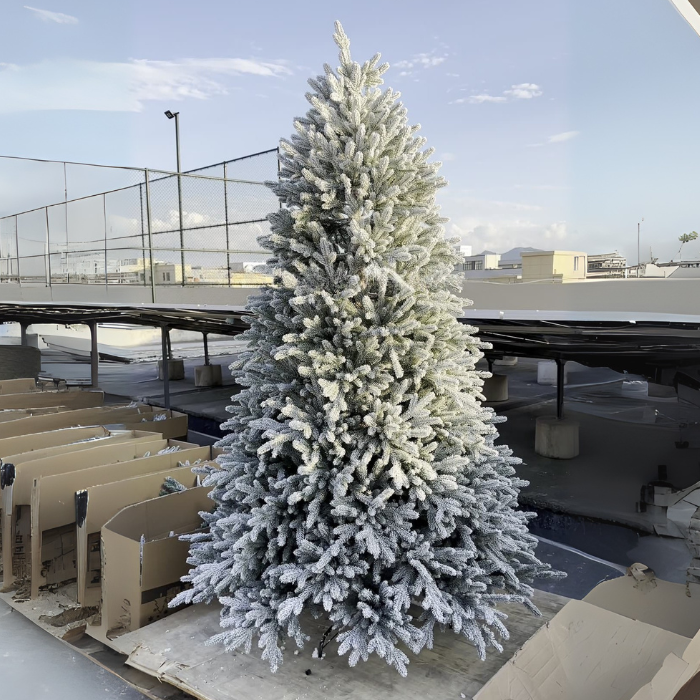
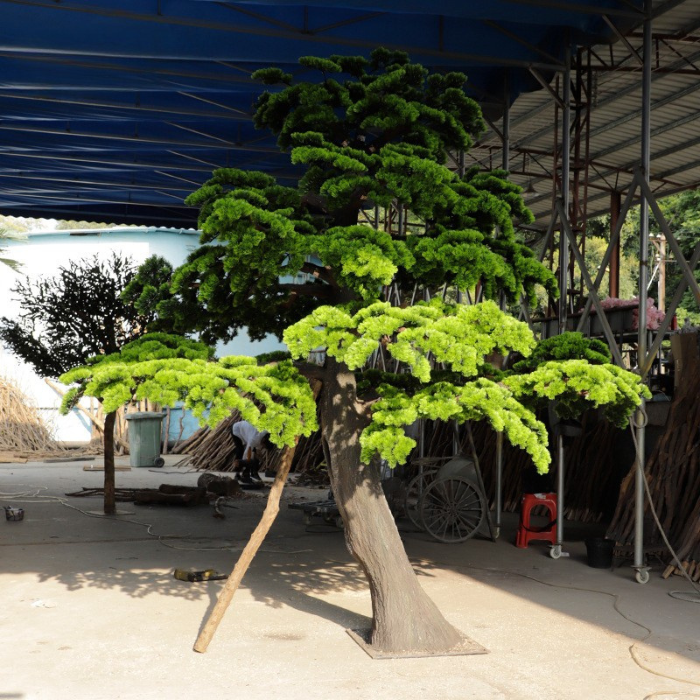
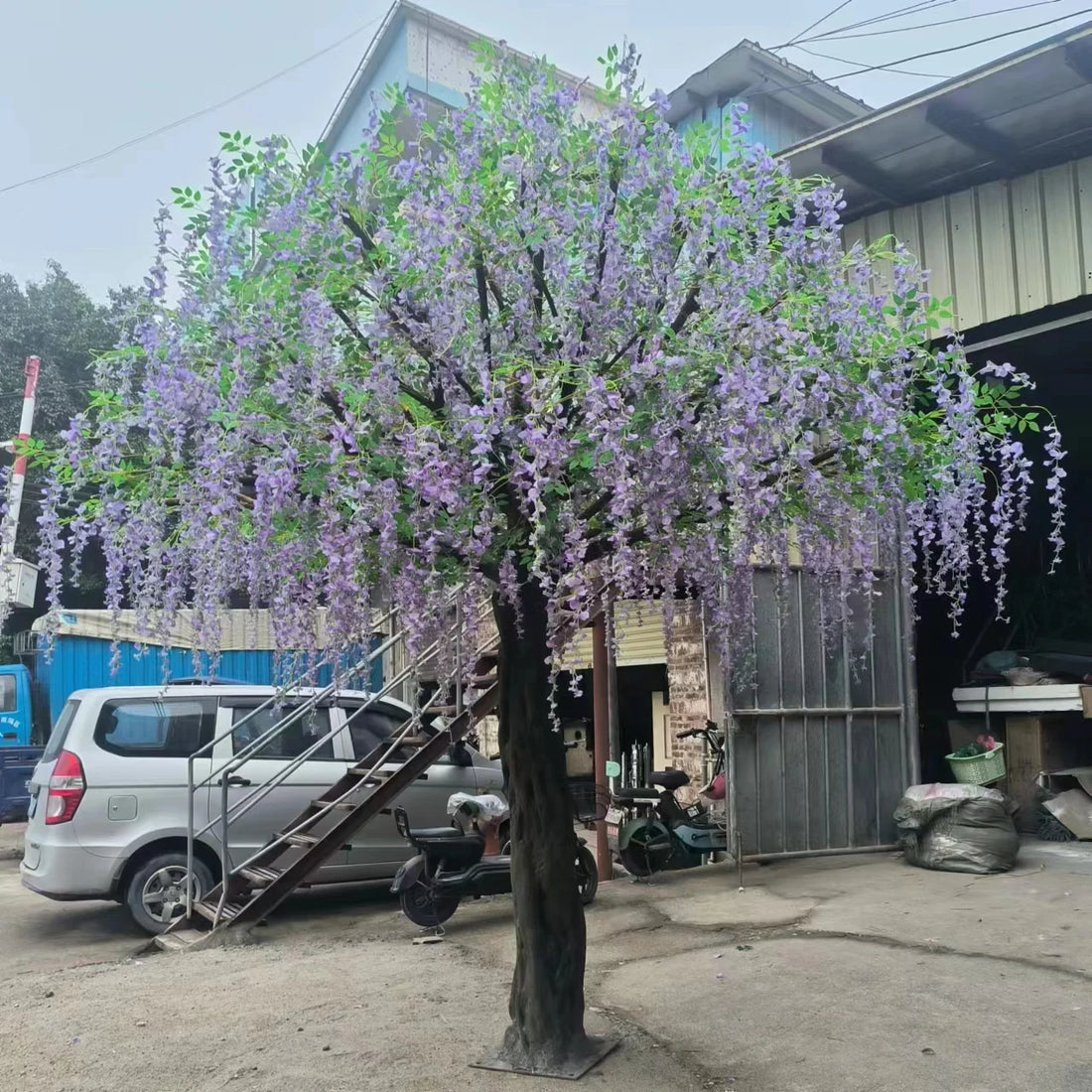
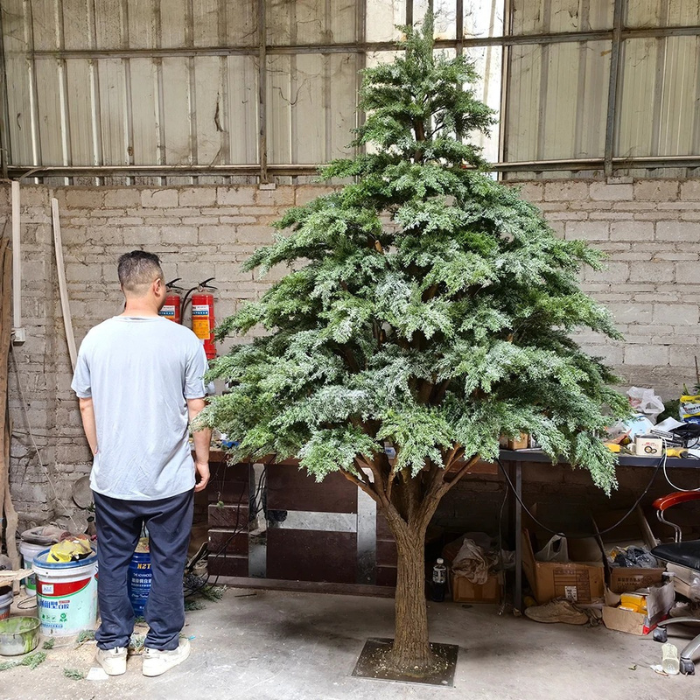
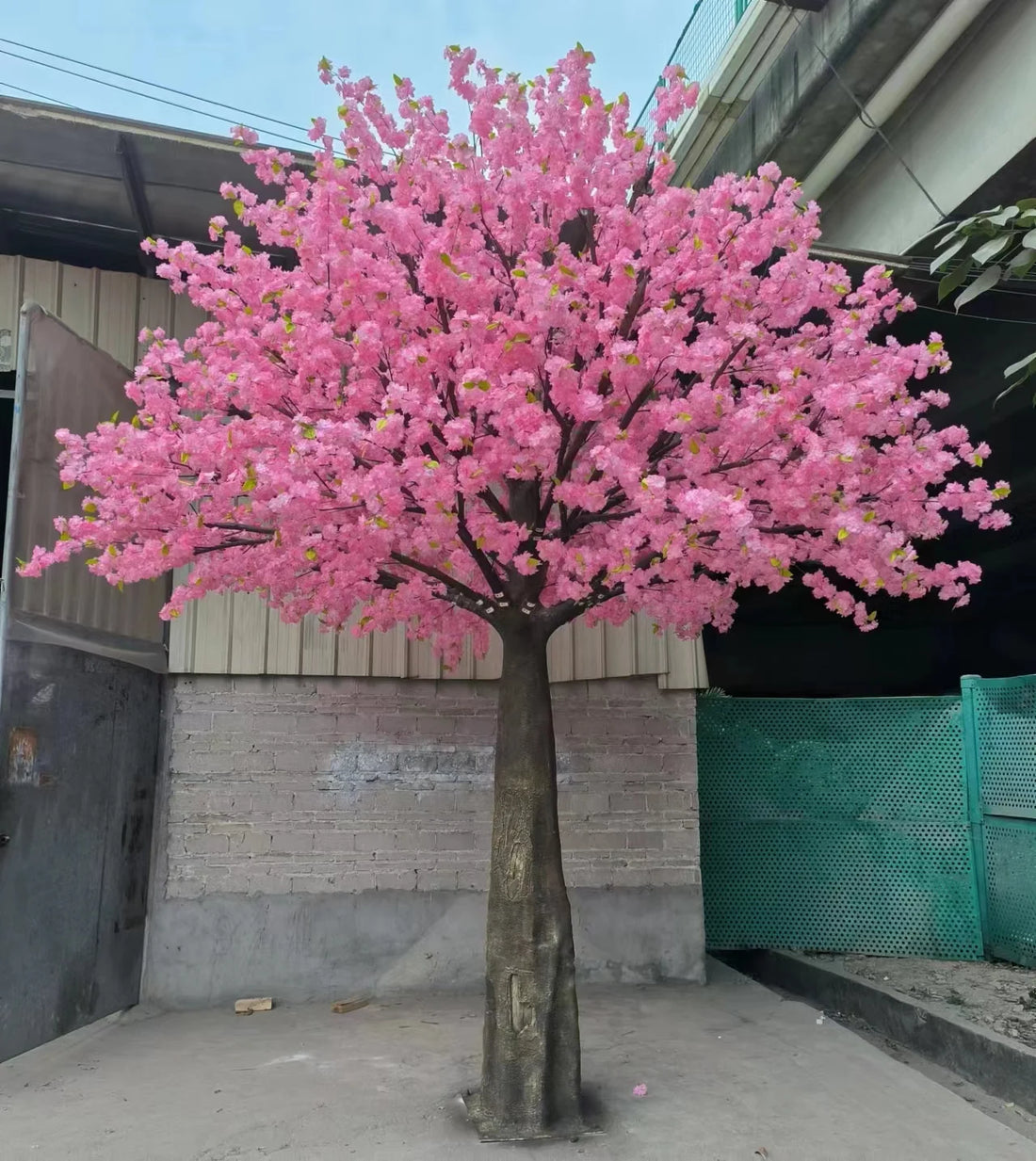
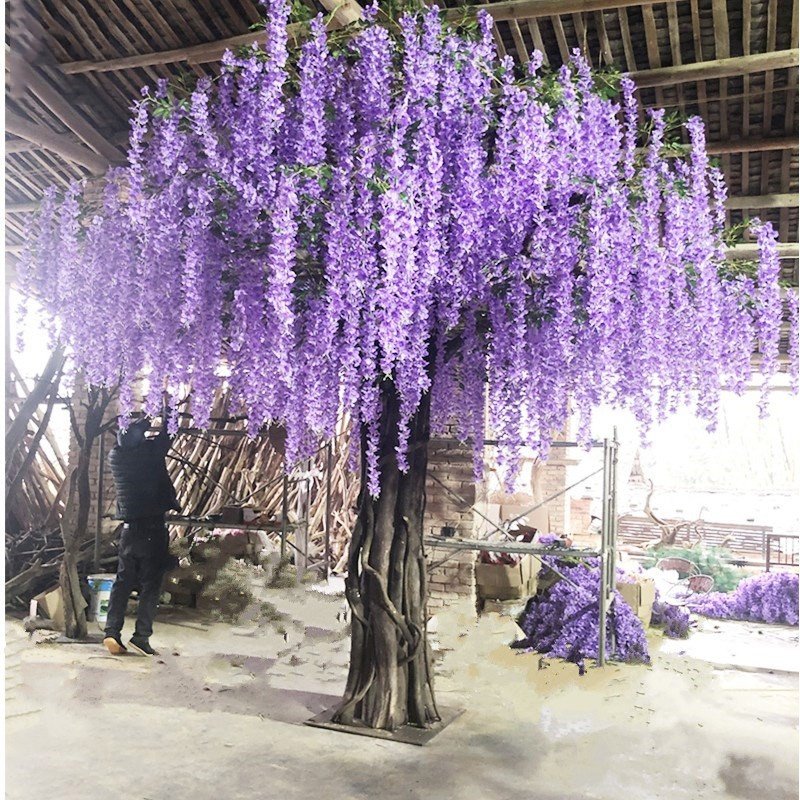
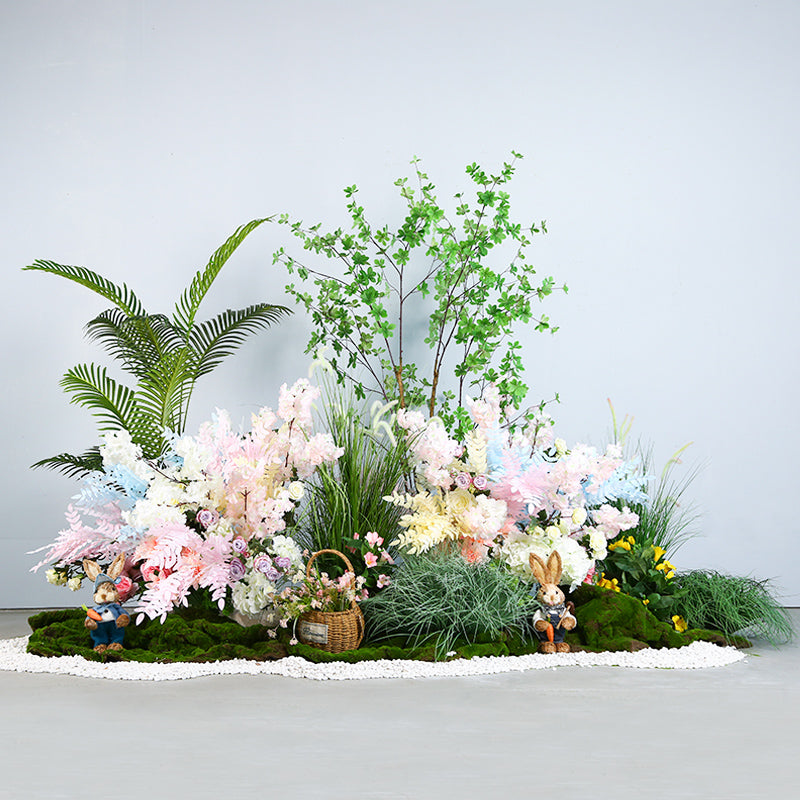
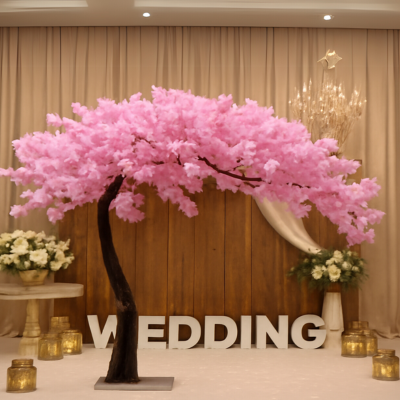
Artificial trees for architects that elevate every project
Artificial trees for architects open a world of creative freedom, allowing you to plan bold, biophilic spaces without compromise. This curated collection from Faux Natural is crafted specifically for architects, specifiers, and design professionals who require architectural artificial greenery that is both visually refined and project-ready. Each piece is conceived as a design element in its own right, bringing sculptural form, natural texture, and lasting elegance to hospitality, workplace, retail, residential, and cultural environments.
From intimate reception areas to expansive atriums, these specification grade artificial trees are developed to support complex briefs and demanding commercial standards. The result is a portfolio of premium commercial artificial trees that seamlessly integrate into your material palette, lighting concept, and spatial composition.
Why artificial trees for architects and specifiers make sense
When you are selecting greenery for a commercial or high-end residential project, reliability and design control are essential. Artificial trees for architects and artificial trees for specifiers provide predictable outcomes from concept through installation. Height, form, canopy spread, and planter proportions can be considered early in the design process and held consistent through vis...
Artificial trees for architects that elevate every project
Artificial trees for architects open a world of creative freedom, allowing you to plan bold, biophilic spaces without compromise. This curated collection from Faux Natural is crafted specifically for architects, specifiers, and design professionals who require architectural artificial greenery that is both visually refined and project-ready. Each piece is conceived as a design element in its own right, bringing sculptural form, natural texture, and lasting elegance to hospitality, workplace, retail, residential, and cultural environments.
From intimate reception areas to expansive atriums, these specification grade artificial trees are developed to support complex briefs and demanding commercial standards. The result is a portfolio of premium commercial artificial trees that seamlessly integrate into your material palette, lighting concept, and spatial composition.
Why artificial trees for architects and specifiers make sense
When you are selecting greenery for a commercial or high-end residential project, reliability and design control are essential. Artificial trees for architects and artificial trees for specifiers provide predictable outcomes from concept through installation. Height, form, canopy spread, and planter proportions can be considered early in the design process and held consistent through visualizations, client presentations, and final delivery.
Because each tree maintains its appearance over time, you can confidently design feature moments, sightlines, and framing elements around them. This is particularly valuable in signature spaces such as lobbies, lounges, galleries, and branded environments, where consistency in color, density, and silhouette helps preserve your intended atmosphere.
Specification grade artificial trees for demanding projects
Faux Natural’s specification grade artificial fire-resistant trees and UV-oriented solutions are engineered for the realities of contract interiors and public spaces. Beyond their botanical realism, these trees are developed with materials and finishes aligned to commercial performance requirements. Options include UV-resistant foliage for sunlit atriums and terraces, and fire-rated components suitable for many public and hospitality projects.
This collection supports comprehensive design documentation. As a commercial artificial tree supplier dedicated to professional projects, Faux Natural provides a range of solutions that can be aligned with code-conscious specifications, wayfinding strategies, and brand standards. The trees function not only as decoration, but also as architectural tools to articulate zones, soften circulation routes, and create visual rhythm across large volumes.
Architectural artificial greenery with lifelike presence
Every piece within this category is conceived to complement sophisticated interiors. Realistic artificial trees for commercial projects use botanically inspired forms, textured trunks, and carefully shaded foliage to achieve a natural, understated presence. From expressive branching structures to delicately layered leaves, these trees are designed to hold up to close scrutiny from both clients and guests.
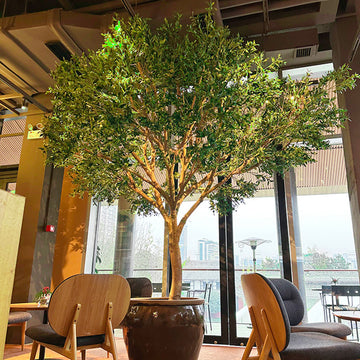
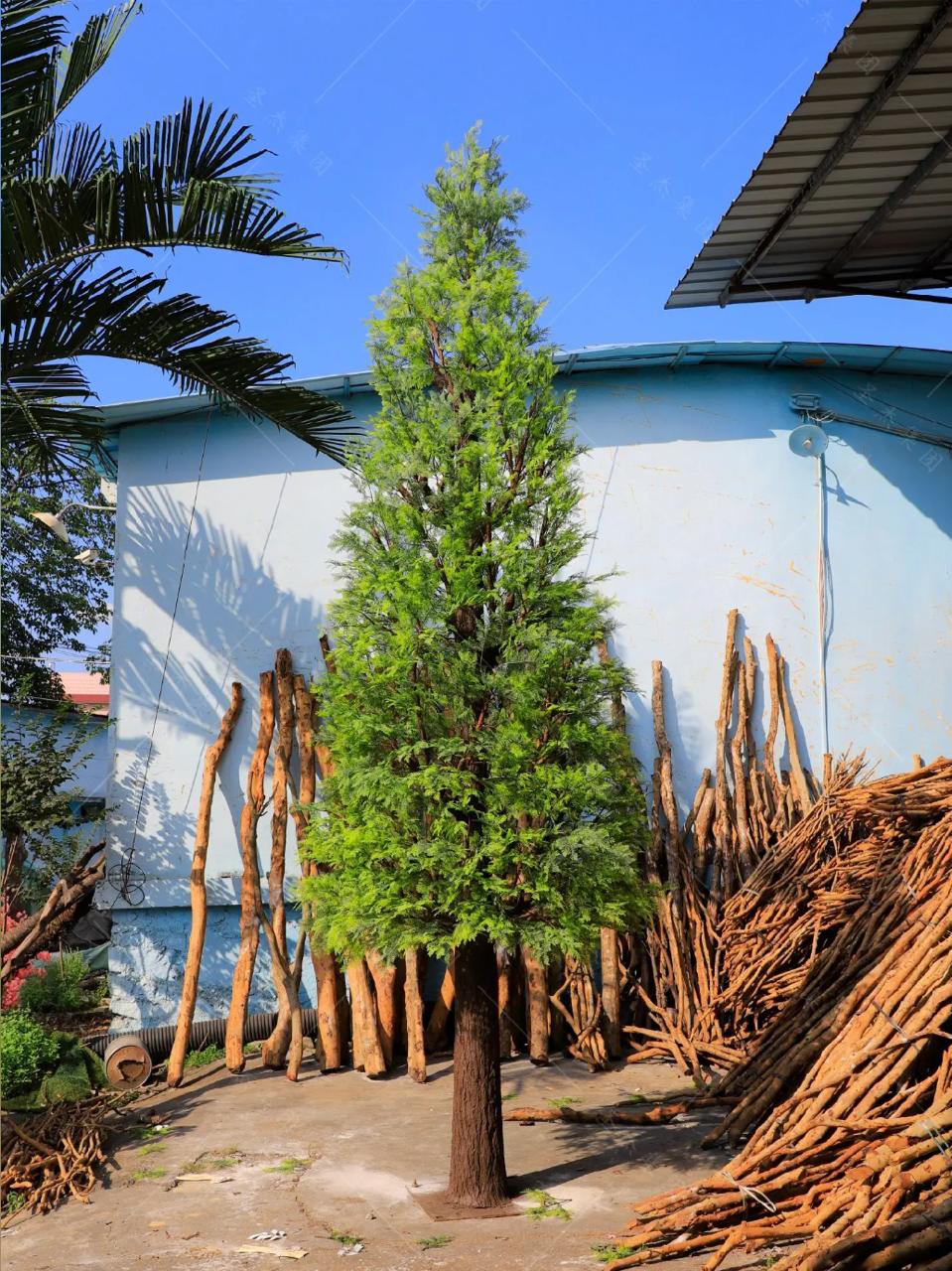
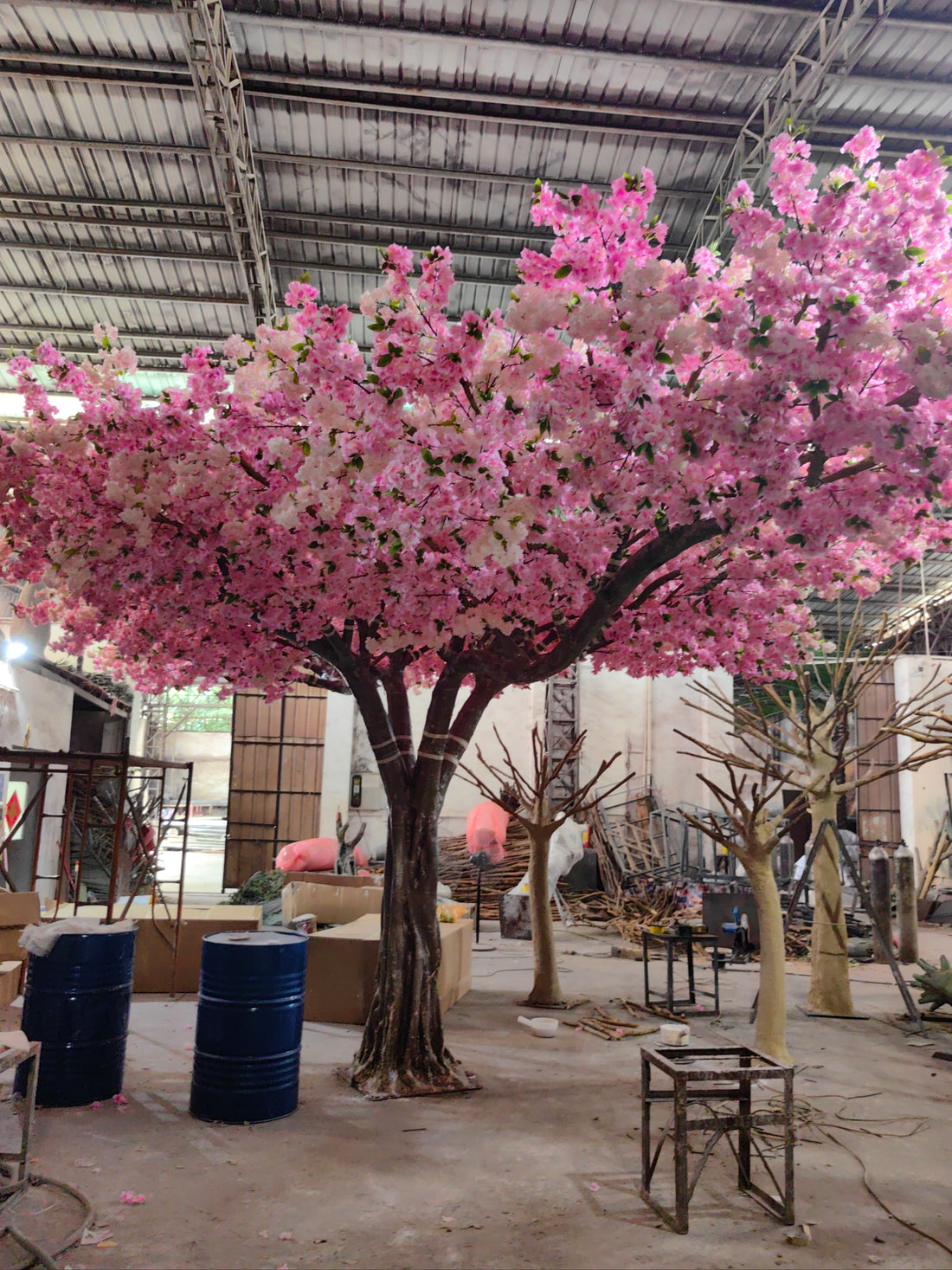
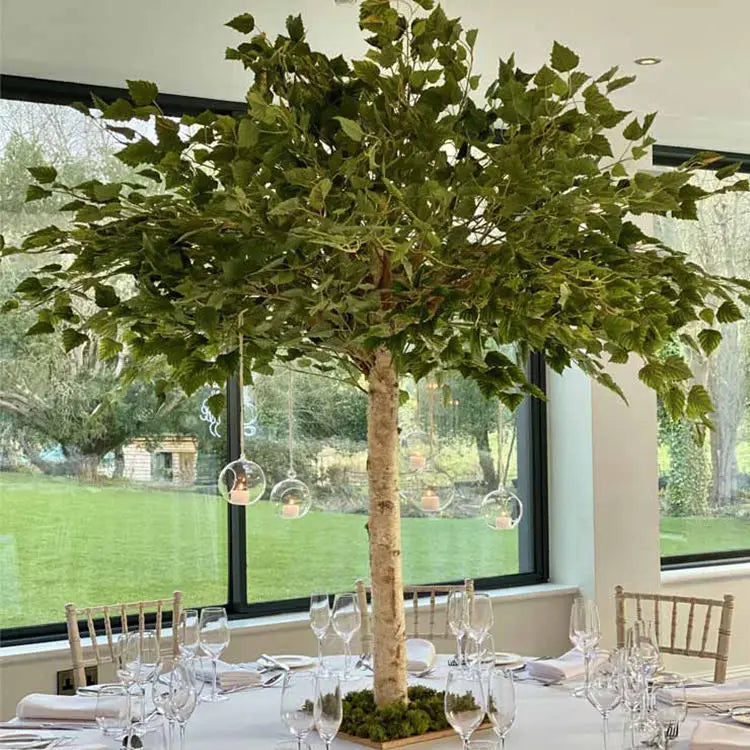
The range spans calm, airy silhouettes such as artificial olive trees and birch, lush canopies reminiscent of tropical or Mediterranean destinations, and sculptural preserved moss trees that read as living art installations. This diversity makes it possible to echo regional landscapes, reference local ecology, or align greenery with a particular narrative concept.
Custom artificial trees for projects with unique requirements
Many architectural concepts require more than standard sizes or forms. Custom artificial trees for projects offer the flexibility to translate your design intent into a tailored botanical statement. Height can be scaled to suit double-height lobbies or intimate lounges, canopy density can be softened or increased to match your lighting scheme, and trunk structures can be composed to create distinctive silhouettes.
Planter selection is another important tool in integrating artificial greenery for architects into the overall scheme. Minimalist vessels for contemporary spaces, refined forms for boutique hospitality, or monolithic bases for large scale artificial tree installations can all be considered as part of the design language. The result is a cohesive, intentional composition where tree, planter, finishes, and furnishings form a single visual story.
Premium commercial artificial trees across sectors
These artificial trees for architects are conceived for a broad range of sectors, each with its own spatial and experiential goals:
Corporate and workplace environments, where curated greenery supports wellness-focused design and creates welcoming reception areas, breakout zones, and collaboration spaces.
Hospitality and leisure projects, where premium commercial artificial trees introduce a resort-like atmosphere to lobbies, lounges, poolsides, and rooftop terraces.
Retail and experiential spaces, where strong visual moments are essential for storytelling, customer journeys, and brand differentiation.
Residential amenities and high-end private interiors, where architectural artificial greenery adds refinement to entrance halls, winter gardens, and shared lounges.
Education, healthcare, and cultural venues, where calm, nature-inspired elements can soften large volumes and create inviting, restorative environments.
In each context, the aim is to provide a durable, elegant botanical layer that enhances the architecture rather than competing with it.
Designing with large scale artificial tree installations
For atriums, galleries, and expansive lobbies, large scale artificial tree installations become powerful architectural features. Multiple trees can be arranged to create a grove-like composition, guide circulation, or frame views to key focal points. Carefully chosen species expressions and canopy heights allow you to play with perspective, making tall spaces feel more intimate or emphasizing their vertical drama.
Because these installations retain their form and color, they are ideal for complex lighting designs. You can layer indirect lighting, spotlights, and natural light without concern for growth patterns or seasonal change, ensuring that shadows, highlights, and reflections remain aligned with your original concept.
Realistic artificial trees commercial clients can rely on
For commercial clients, realism is closely linked to perceived quality. Realistic artificial trees commercial decision-makers select must look refined not only from a distance, but at eye level and in close proximity. Faux Natural’s collection centers on natural wood trunks, nuanced branching, and multi-tonal foliage to achieve this standard.
These details are especially important in hospitality suites, executive lounges, and guest-facing retail environments, where patrons spend time near planters, seating zones, and bar counters. Lifelike texture and proportion turn each tree into a subtle luxury element, reinforcing the overall design language of the space.
Integrating artificial greenery for architects into your concept
Artificial greenery for architects is most successful when considered early in the design process. By defining where feature trees will anchor vistas, soften structural elements, or create privacy, you can coordinate them with finishes, ceiling treatments, and lighting from the outset. This ensures that every tree feels integral to the architecture rather than added as an afterthought.
In open-plan environments, artificial trees for specifiers can help delineate zones without relying on solid partitions. A cluster of trees can suggest a lounge or collaboration area, while a line of slender trunks can subtly edge a circulation route. Coupled with textiles, acoustic panels, and furniture, they become part of a layered, human-centered interior.
Choosing the right artificial trees for architects
Selecting the appropriate piece within this collection begins with the role you want the tree to play in the space:
For quiet, refined backdrops, choose slender forms with airy canopies that complement natural stone, timber, and soft neutral palettes.
For bold focal points, opt for fuller canopies or sculptural preserved moss trees that function almost as living sculptures.
For cohesive, multi-level schemes, repeat a single species expression in varying heights across lobbies, corridors, and amenity areas.
For expressive entrances or branded zones, use custom artificial trees for projects tailored to echo logos, color stories, or regional botanicals.
As a commercial artificial tree supplier dedicated to architectural applications, Faux Natural offers a versatile toolkit for creating immersive, nature-inspired interiors that retain their composure over time.
With specification grade artificial trees, premium finishes, and thoughtful customization, this collection invites architects, interior designers, and specifiers to compose spaces where greenery and architecture are in perfect alignment.
FAQ about artificial trees for architects
How can artificial trees for architects be integrated into commercial project specifications?
Artificial trees for architects can be included in project specifications by defining height ranges, foliage density, fire-retardant standards, and installation methods. Specifiers typically reference product families, finishes, and mounting details to align with overall architectural intent. Coordination with a commercial artificial tree supplier helps ensure compatibility with structural and MEP requirements.
What defines specification grade artificial trees for architects and specifiers?
Specification grade artificial trees are designed with consistent quality, standardized sizing, and documented performance characteristics. They often include technical data for fire behavior, UV stability context, and material composition. This allows architects and specifiers to detail artificial trees for specifiers in drawings, schedules, and tender documents with predictable outcomes.
Are custom artificial trees for projects suitable for large scale artificial tree installations?
Custom artificial trees for projects are frequently used for atriums, retail environments, and hospitality lobbies where dimensions and forms must match the architecture. For large scale artificial tree installations, modular construction and engineered trunks or bases are used for transport and assembly. Early coordination with structural design helps define anchoring points and load distribution.
What should architects consider when selecting realistic artificial trees commercial for indoor spaces?
Architects typically assess canopy spread, visual scale, and foliage character relative to ceiling heights and circulation routes. Realistic artificial trees commercial should be coordinated with lighting design to avoid glare and shadows that affect wayfinding. Integration with surrounding architectural artificial greenery creates visual continuity across the interior concept.
How do premium commercial artificial trees support wayfinding and spatial zoning?
Premium commercial artificial trees can act as vertical markers that indicate entrances, waiting areas, or informal meeting zones. When used with artificial greenery for architects, they help define edges between pathways and seating without permanent partitions. Their consistent appearance over time supports long-term legibility of circulation routes.