Artificial shade trees that transform outdoor and indoor spaces
Artificial shade trees open up new possibilities for elegant, welcoming spaces where natural canopies are difficult to achieve. At Faux Natural, this collection of artificial shade trees is curated for those who seek instant greenery, sculptural silhouettes, and generous shade without compromise. From resort-inspired palms to dense, leafy ficus and olive trees, each design is crafted to look remarkably lifelike while creating comfortable, shaded areas for relaxation, conversation, and gathering.
Whether you are styling a private terrace, planning an event, or shaping a large commercial environment, these realistic artificial shade trees are created to harmonize architecture, light, and circulation. They bring height, volume, and softness to any setting, helping you define zones, guide movement, and enhance atmosphere with a natural, timeless presence.
Realistic artificial shade trees with a refined, natural look
The defining quality of this category is realism. Faux Natural’s artificial trees are designed to emulate the character of mature trees—from the twisting texture of olive trunks to the layered canopy of ficus and broadleaf varieties. Each tree is shaped with a carefully consider...
Artificial shade trees that transform outdoor and indoor spaces
Artificial shade trees open up new possibilities for elegant, welcoming spaces where natural canopies are difficult to achieve. At Faux Natural, this collection of artificial shade trees is curated for those who seek instant greenery, sculptural silhouettes, and generous shade without compromise. From resort-inspired palms to dense, leafy ficus and olive trees, each design is crafted to look remarkably lifelike while creating comfortable, shaded areas for relaxation, conversation, and gathering.
Whether you are styling a private terrace, planning an event, or shaping a large commercial environment, these realistic artificial shade trees are created to harmonize architecture, light, and circulation. They bring height, volume, and softness to any setting, helping you define zones, guide movement, and enhance atmosphere with a natural, timeless presence.
Realistic artificial shade trees with a refined, natural look
The defining quality of this category is realism. Faux Natural’s artificial trees are designed to emulate the character of mature trees—from the twisting texture of olive trunks to the layered canopy of ficus and broadleaf varieties. Each tree is shaped with a carefully considered branch structure and leaf distribution, so the canopy feels full and generous rather than uniform or rigid.
These realistic artificial shade trees are ideal where authenticity matters: boutique hotels, high-end residences, flagship stores, and curated event environments. Color variation, subtle irregularities, and organic silhouettes make the trees blend beautifully with both real plants and architectural features. The result is a calm, intentional aesthetic that supports your overall design concept rather than overwhelming it.
Large artificial shade trees for bold, architectural impact
When you need scale, large artificial shade trees become an architectural element in their own right. Oversized artificial trees outdoor can frame an entrance, anchor a lobby, or create an intimate canopy over lounge seating. In spacious atriums, gallery-like interiors, or expansive terraces, their height and breadth add vertical drama while visually softening hard lines and large surfaces.
For designers and planners, large artificial shade trees are especially effective in:
- Hotel and resort arrival areas where a strong first impression is essential
- Mall common spaces that require visual focal points and subtle zoning
- Corporate headquarters and offices seeking a warm, biophilic atmosphere
- Rooftop lounges that benefit from ample shade and a sense of enclosure
Because these trees are purpose-built to create canopy, they work beautifully over seating groups, reception desks, lounge zones, or pathways, visually gathering the space beneath them into a coherent and inviting setting.
Olive, ficus, palms and more: decorative artificial shade trees by style
Different species within the artificial shade trees collection help you express distinct moods and design directions. Choosing the right style allows you to echo your architecture, regional influences, and brand story.
Preserved and artificial olive trees have an airy, Mediterranean elegance with slender leaves and sculptural trunks. They suit minimalist interiors, villas, contemporary restaurants, and terraces that favor a sun-washed, refined aesthetic. Their relaxed yet sophisticated character pairs beautifully with stone, linen, warm metals, and neutral palettes.
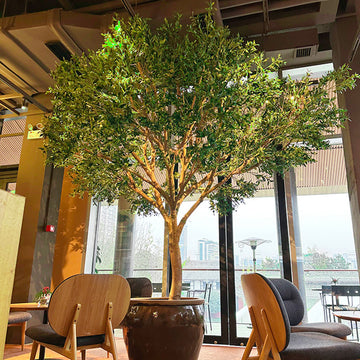
Artificial ficus trees offer lush, dense foliage and a more enclosed, sheltering feel. As decorative artificial shade trees, they create intimate corners, soft backdrops, and comfortable nooks for reading, dining, or conversation. Their full canopy is ideal when you want the sense of being embraced by greenery in lounges, lobbies, cafes, or family living spaces.
Tropical palms and broadleaf trees bring a resort-like atmosphere to pool decks, spa areas, roof terraces, and outdoor lounges. Their sweeping fronds and wide canopies evoke relaxation and vacation living, especially when placed near water features, daybeds, or cabanas. Used in repetition, these faux shade trees outdoor can define promenades or frame views with a strong visual rhythm.
Faux shade trees outdoor: creating comfortable shaded retreats
Artificial trees for shaded patios are ideal when natural conditions make living trees challenging. Intense sun, wind exposure, heavy foot traffic, or architectural constraints often limit what can thrive. Faux shade trees outdoor bypass these constraints while still delivering a generous canopy and lush greenery.
These UV resistant artificial shade trees are crafted for demanding exterior environments where colorfastness and structural resilience are essential. Their realistic foliage and trunks maintain their character in courtyards, terraces, and rooftop settings that experience strong sun and changing weather. Strategically placed, they can:
- Create shade over dining tables and lounge seating
- Screen neighboring buildings or less attractive views
- Define pathways between zones such as bar, pool, and cabana areas
- Provide visual continuity between indoor lounges and outdoor decks
For residential patios, a single statement canopy tree can transform a compact balcony into a secluded retreat, while for larger decks, a grouping of faux shade trees outdoor can suggest a small grove, softening railings and hard surfaces with layered greenery.
Commercial artificial shade trees for hotels, retail and public spaces
Commercial artificial shade trees are particularly valuable in hospitality, retail, and large public interiors, where consistency, longevity, and visual cohesion are priorities. In hotels, they enhance lobbies, ballrooms, spa waiting areas, and pool decks—bringing a sense of calm and exclusivity while guiding guests intuitively through the space.
In retail environments and shopping centers, artificial canopy trees help define zones within open areas, direct circulation, and create memorable gathering points without obstructing sightlines. Used in food courts, atriums, and seating islands, they add comfort and warmth, encouraging guests to linger in a visually curated environment.
Event planners and staging professionals also benefit from the instant transformation that commercial artificial shade trees provide. For weddings, brand activations, and gala events, these trees introduce height and drama, framing stages, bars, and lounges while aligning with a defined style narrative—whether Mediterranean, tropical, urban, or classical.
Artificial canopy trees for zoning, flow and atmosphere
Beyond their functional shade, artificial canopy trees are powerful spatial tools. Their spreading crowns define invisible “rooms” within larger areas, guiding flows and shaping how people move and gather. A cluster of realistic artificial shade trees can suggest an outdoor garden in the middle of a lobby. One or two carefully placed trees can transform a corridor into a leafy promenade or turn a corner of a restaurant into the most sought-after table.
In home interiors, artificial canopy trees bring similar benefits on a more intimate scale. They soften double-height spaces, gently frame staircases or mezzanines, and provide a natural counterpoint to clean-lined furniture and contemporary materials. Positioned near windows or glass doors, they blur the boundary between inside and out, visually extending your living area into terraces or gardens.
Choosing the right artificial shade trees for your project
When selecting artificial shade trees for your space, begin with the mood and function you want to achieve. Decide whether you are aiming for a relaxed, resort-like atmosphere, a refined urban setting, a Mediterranean courtyard feel, or a lush, garden-inspired ambience. This will naturally guide you toward palms, olives, ficus, or broadleaf designs.
Next, consider scale. Large artificial shade trees work best in open spaces with generous ceiling height or expansive outdoor areas. For more compact rooms, choose trees with narrower footprints or airier canopies that do not visually overwhelm the space. Think about how the canopy will interact with lighting, furniture groupings, and architectural features such as columns, staircases, and glazing.
For outdoor environments, focus on UV resistant artificial shade trees designed for exterior use. These oversized artificial trees outdoor are especially suited to rooftops, courtyards, and pool decks where both style and durability matter. For indoor projects, you can prioritize species aesthetics and silhouette, knowing that placement, proportion, and visual balance will do much of the design work.
Finally, consider whether a single statement tree or a carefully arranged grouping will best serve your concept. One grand feature can act as a sculptural focal point, while multiple trees can create the feeling of a complete landscape—inviting guests, residents, or clients to linger beneath a canopy of greenery that feels both curated and effortlessly natural.
FAQ about artificial shade trees
What are artificial shade trees and how are they typically used?
Artificial shade trees are faux trees designed with wide canopies to suggest shaded areas without relying on live foliage. They are often used on patios, balconies, and terraces where natural trees are impractical. Many decorative artificial shade trees are also placed in lobbies, restaurants, and retail interiors to define seating zones or walkways.
Can artificial shade trees be used outdoors on shaded patios?
Artificial trees for shaded patios can be used outdoors when they are designed for exterior environments. Many faux shade trees outdoor feature materials intended to handle indirect sun and moisture. Positioning them under coverings, overhangs, or pergolas can help maintain their appearance over time.
What should I consider when choosing large artificial shade trees for commercial spaces?
For commercial artificial shade trees, consider the height, canopy spread, and overall scale in relation to the room or outdoor area. Large artificial shade trees and oversized artificial trees outdoor work best where there is sufficient ceiling height or open air space. It is also useful to select styles that match existing design elements such as furniture, flooring, and architectural lines.
How do realistic artificial shade trees differ from simpler decorative options?
Realistic artificial shade trees typically feature detailed trunks, varied leaf shapes, and natural-looking color gradients. Simpler decorative artificial shade trees may focus more on stylized forms and uniform foliage. Both types can be used effectively, depending on whether the goal is lifelike appearance or a more graphic, design-led look.
Why are UV resistant artificial shade trees recommended for outdoor areas?
UV resistant artificial shade trees are designed with materials that better withstand exposure to sunlight. This helps the foliage and trunk maintain their color and structure when placed in bright or partially exposed locations. UV resistance is particularly relevant for artificial canopy trees and faux shade trees outdoor used in patios, courtyards, and rooftop spaces.