Artificial landscape trees for elevated outdoor design
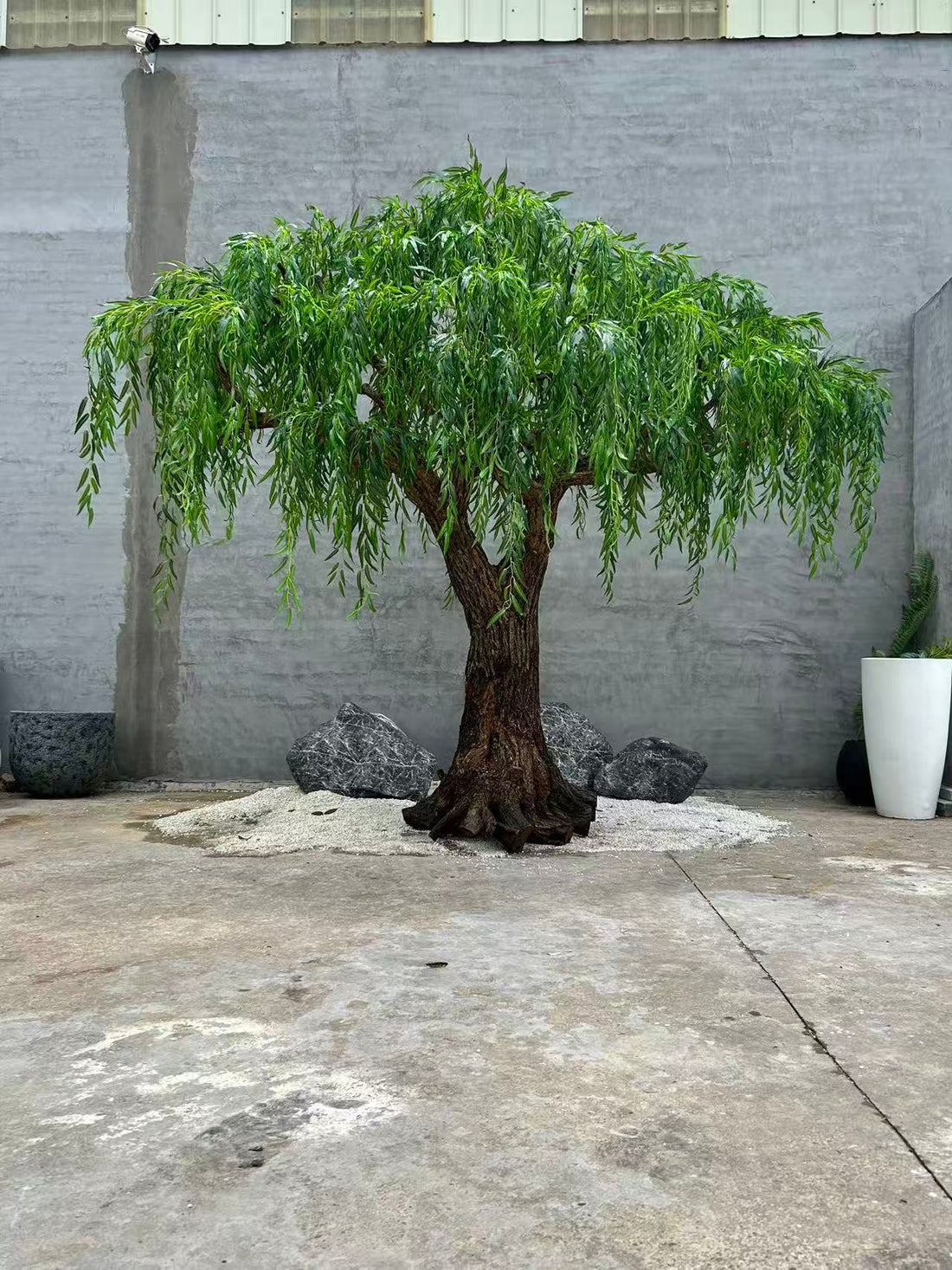
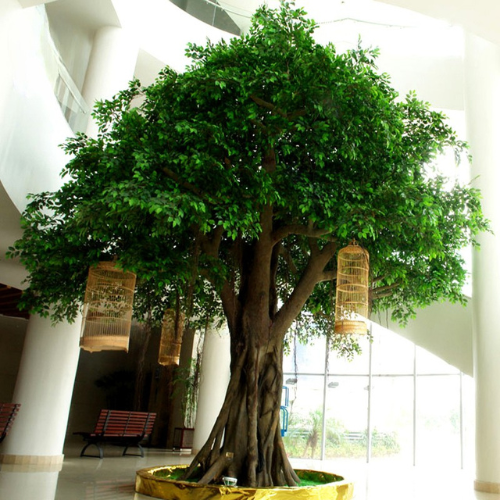
Artificial landscape trees open up a world of creative possibilities for courtyards, terraces, pool areas, and grand commercial spaces. With their lifelike foliage, sculpted trunks, and enduring structure, they allow you to compose dramatic outdoor scenes and refined garden settings that remain beautifully consistent through every season. Whether you are designing a private retreat or a large-scale project, artificial landscape trees give you full freedom to shape the atmosphere without the usual constraints of live planting.
For inspiration across every category of faux greenery, explore the complete collection of artificial plants and trees ready to enhance both outdoor and transitional spaces.
Why choose artificial landscape trees for your project
For designers, stylists, and property owners, artificial trees for landscape design offer the opportunity to realize a clear visual vision and keep it exactly as imagined. Once placed, they retain their form, density, and color, so entrances, terraces, rooftops, and courtyards always look thoughtfully curated.
Outdoor artificial landscaping trees are especially valuable where natural light conditions, wind exposure, or architectural features make planting challenging. They offer impr...
Artificial landscape trees for elevated outdoor design
Artificial landscape trees open up a world of creative possibilities for courtyards, terraces, pool areas, and grand commercial spaces. With their lifelike foliage, sculpted trunks, and enduring structure, they allow you to compose dramatic outdoor scenes and refined garden settings that remain beautifully consistent through every season. Whether you are designing a private retreat or a large-scale project, artificial landscape trees give you full freedom to shape the atmosphere without the usual constraints of live planting.
For inspiration across every category of faux greenery, explore the complete collection of artificial plants and trees ready to enhance both outdoor and transitional spaces.
Why choose artificial landscape trees for your project
For designers, stylists, and property owners, artificial trees for landscape design offer the opportunity to realize a clear visual vision and keep it exactly as imagined. Once placed, they retain their form, density, and color, so entrances, terraces, rooftops, and courtyards always look thoughtfully curated.
Outdoor artificial landscaping trees are especially valuable where natural light conditions, wind exposure, or architectural features make planting challenging. They offer impressive height and volume even in areas with shallow soil, limited irrigation options, or heavy foot traffic. By choosing realistic landscape trees artificial, you can bring structure and lush greenery to any space that benefits from a strong vertical focal point.
Explore styles of faux landscape trees
The collection spans a wide variety of silhouettes, foliage types, and atmospheres. From airy birch crowns to dramatic palms, each style of faux landscape trees supports a different design language:
- Faux birches: Elegant, slender trunks with softly mottled bark and light, delicate foliage. Ideal for creating Nordic-inspired landscapes, framing pathways, or adding height without visual heaviness. Explore dedicated designs in the artificial birch tree selection.
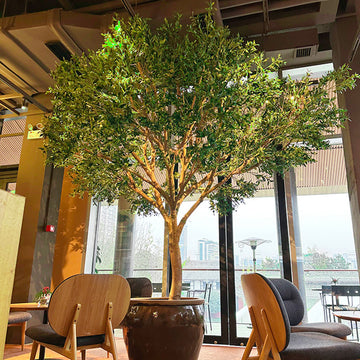
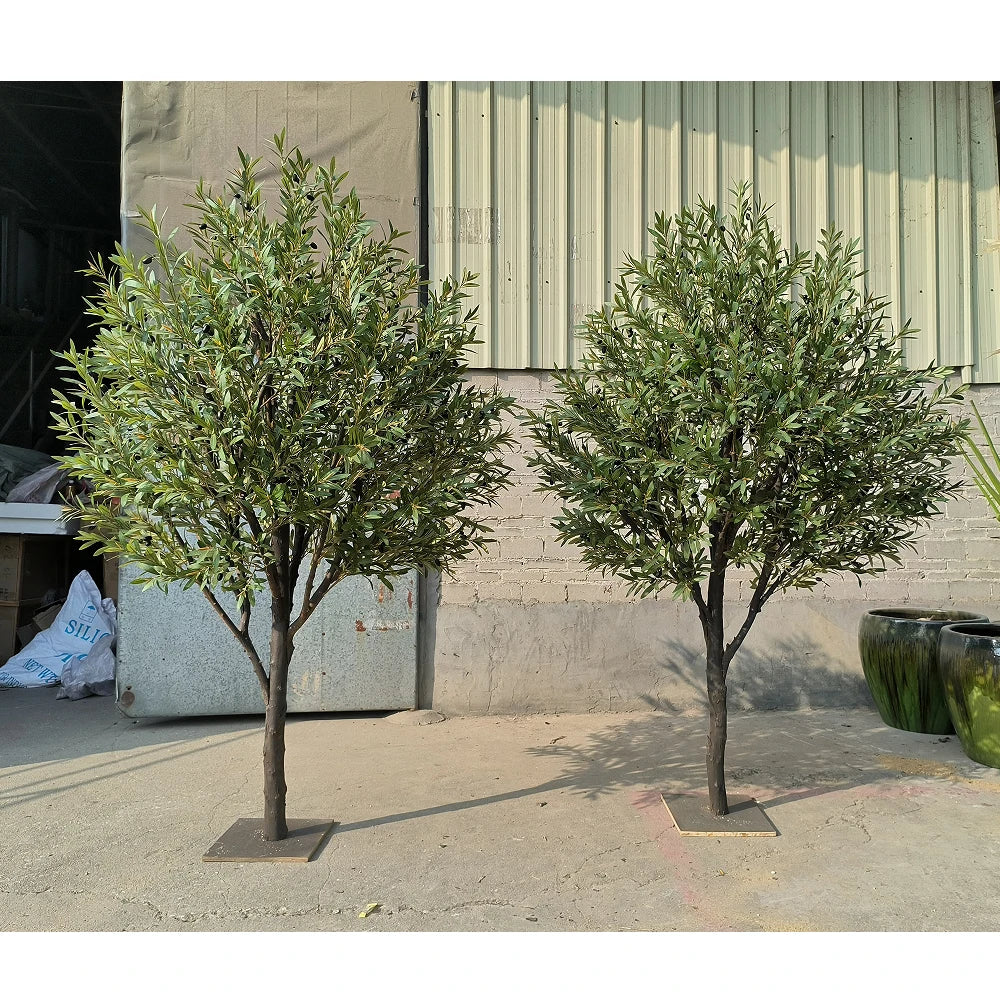
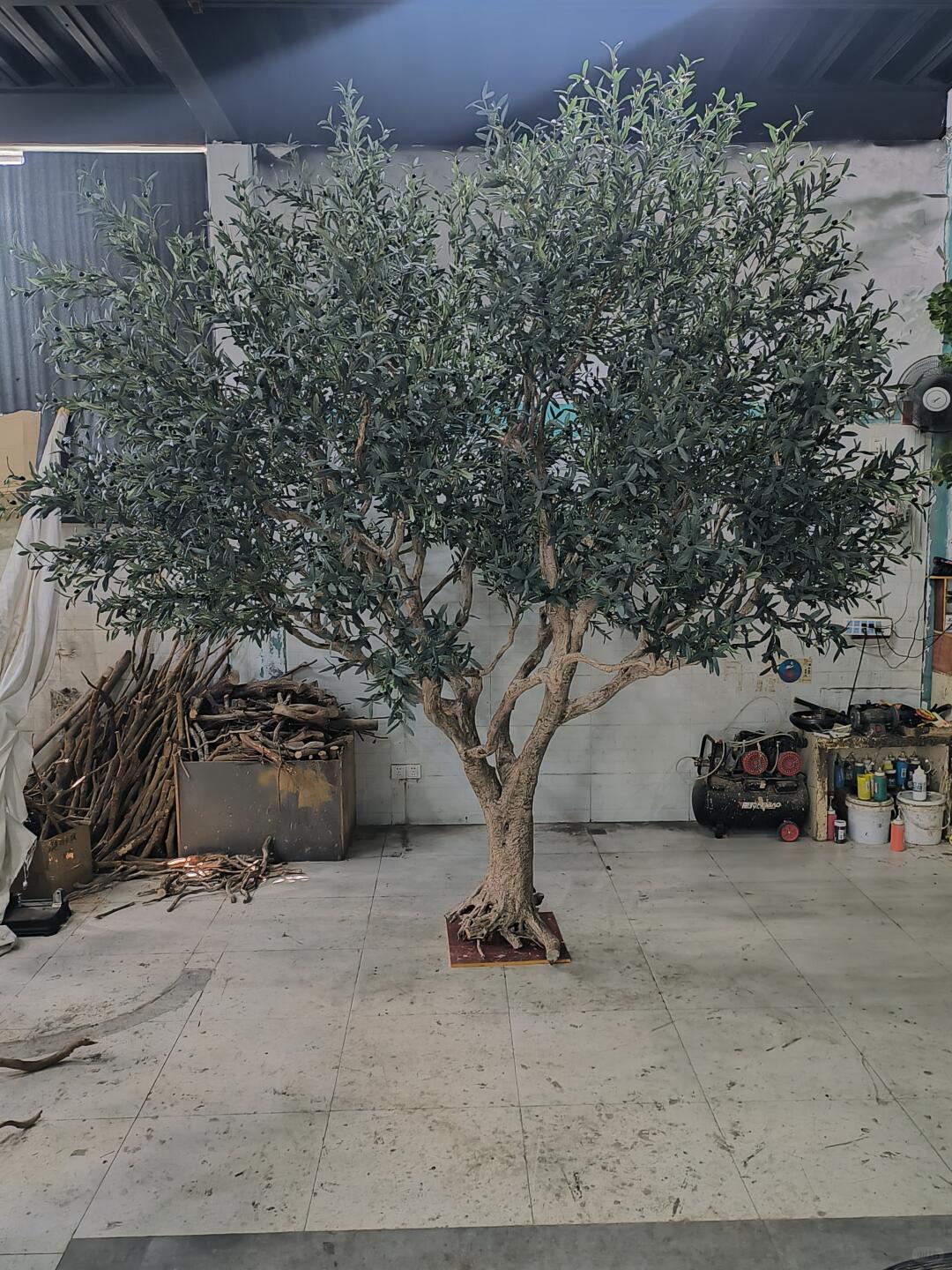
- Faux olive trees: A Mediterranean classic, perfect for terraces, restaurant courtyards, and poolside lounges. Their refined grey-green leaves and gently twisting trunks create a sense of timeless calm and understated luxury. Discover options within the artificial olive tree collection.
- Artificial bamboo trees: Tall, upright canes with dense, linear foliage. Often chosen for privacy screens, borders, and contemporary garden concepts where a rhythm of repeated verticals enhances the architecture.
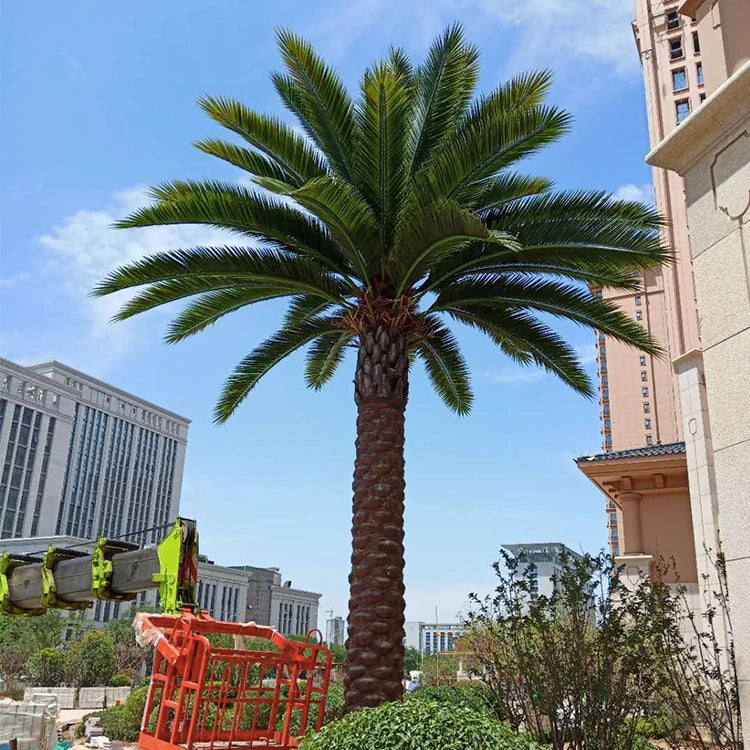
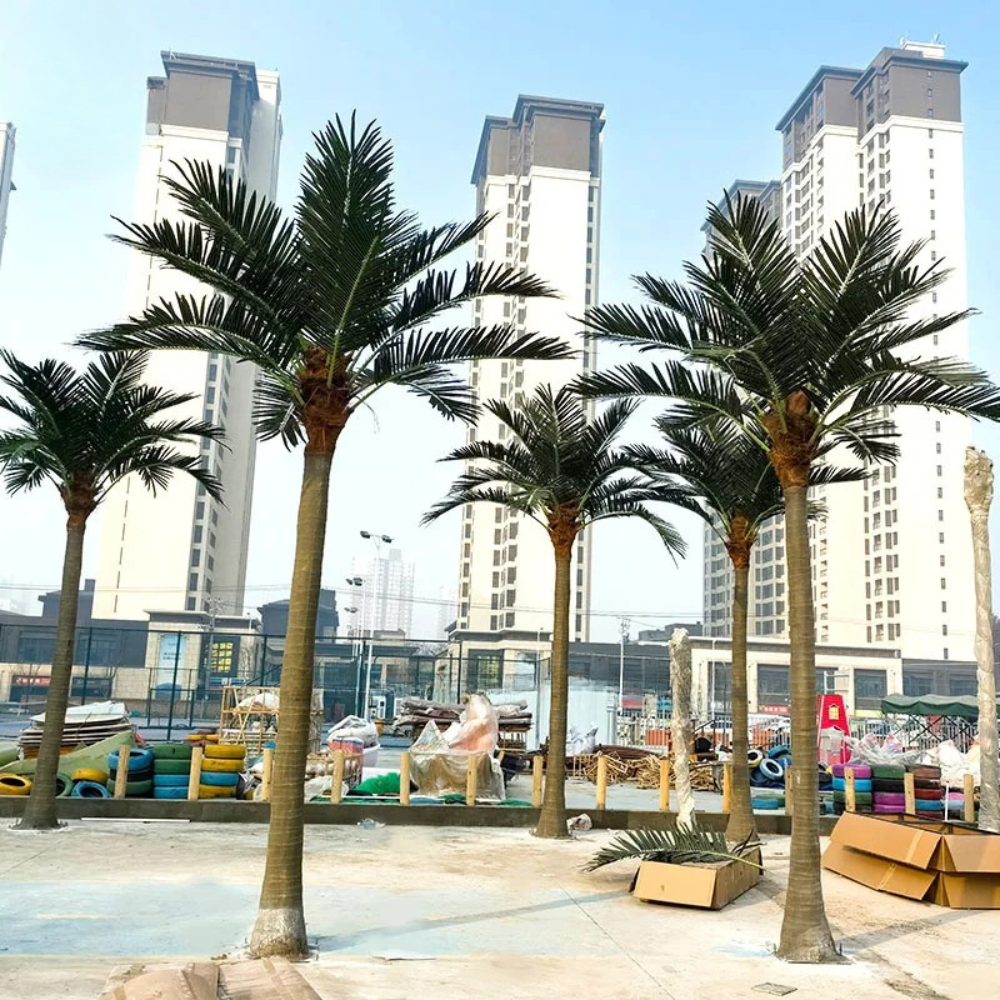
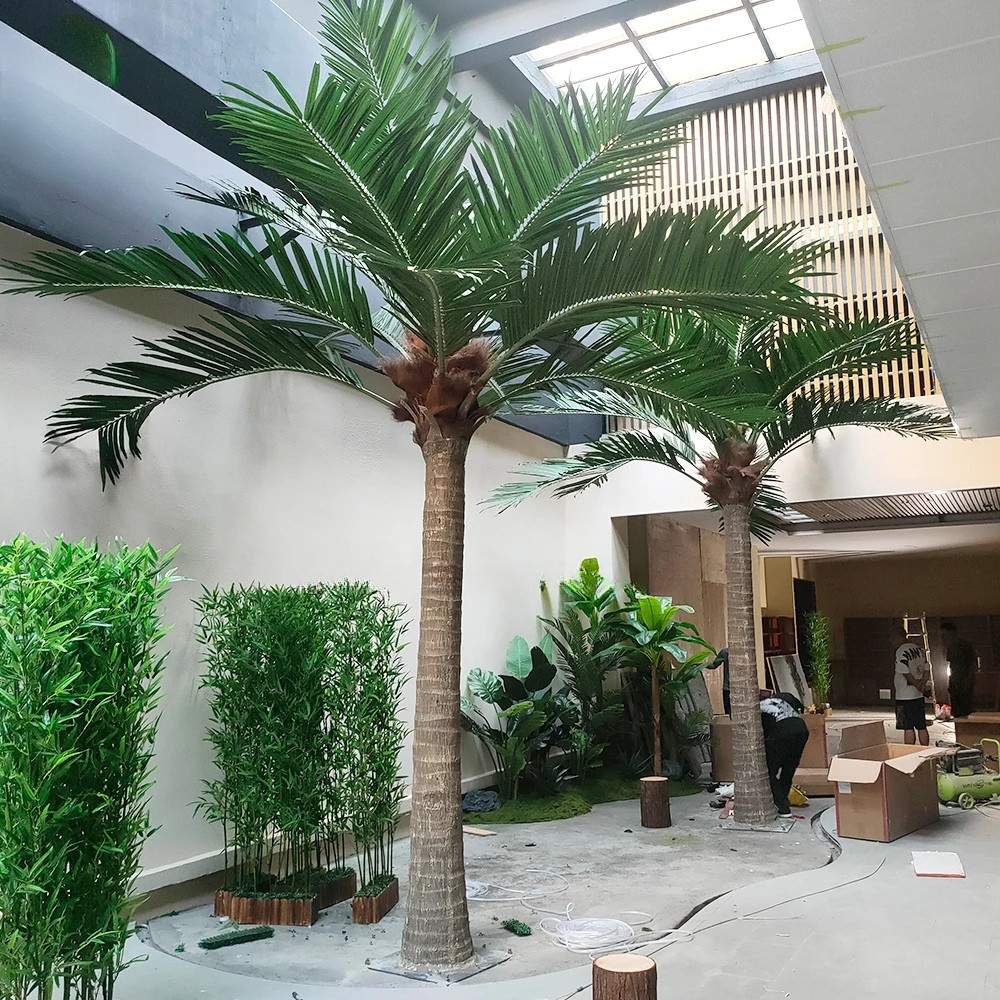
- Artificial palm trees: From Kentia and Areca to Fishtail and Sago, palm-style commercial landscape artificial trees transform spaces into tropical escapes. They work beautifully in pool areas, resort entrances, and sun-drenched atriums. For expressive silhouettes and grand statements, explore curated artificial palm trees tailored to both outdoor and transitional environments.
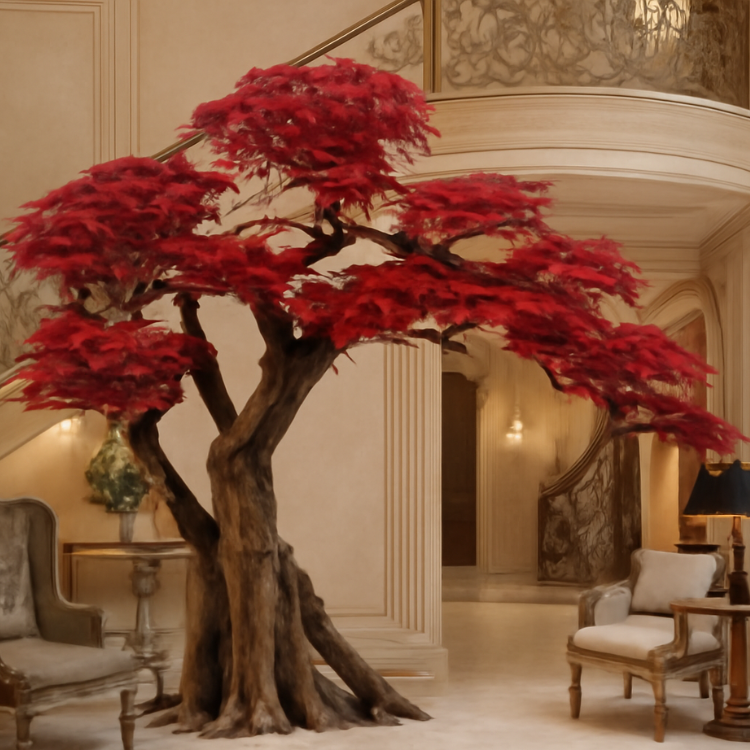
- Faux autumn trees: Vivid orange, amber, and red foliage that captures the warmth of fall year-round. These decorative artificial trees outdoor are particularly striking in retail, hospitality, and event spaces where a bold seasonal mood is desired.
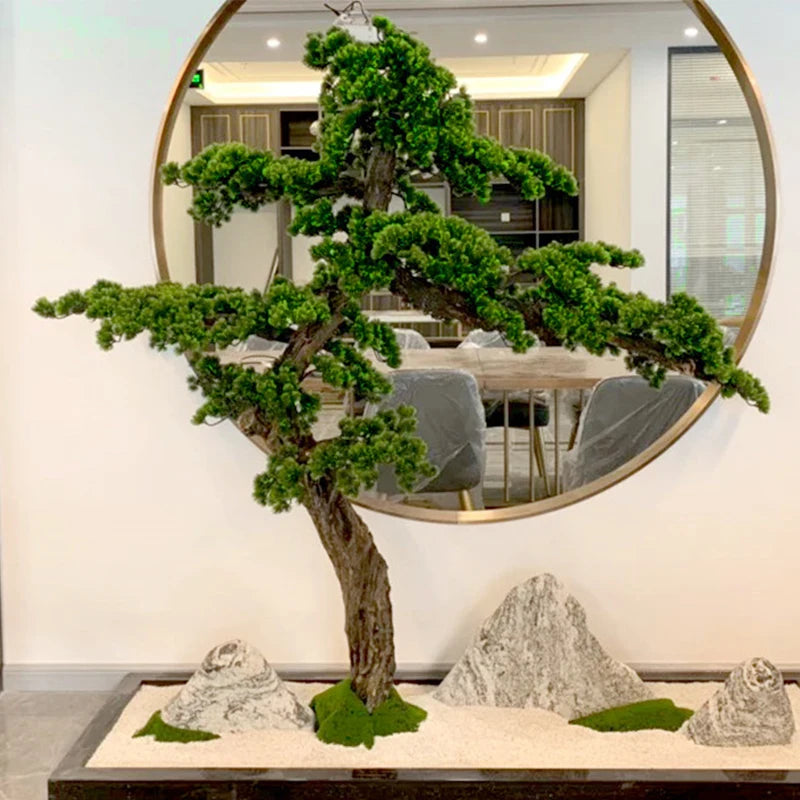
- Custom and oversized landscape trees artificial: Tailored for lobbies, atriums, gallery-like showrooms, and expansive terraces. These statement pieces anchor large volumes and draw the eye upward, making architecture and greenery feel seamlessly connected.
Design ideas for private homes
For residential projects, artificial greenery for landscaping can be used to create serene, livable outdoor rooms with a distinctly curated feel. A pair of faux olive trees can soft-frame French doors leading to a patio, while artificial bamboo trees align along a fence to lend privacy without blocking too much light. On roof terraces or balconies, where weight limits and planter depth are often restrictive, weatherproof artificial landscape trees offer height and presence with remarkable flexibility.
Consider arranging smaller and medium-height artificial landscape trees in clusters to echo natural groves, combining, for example, several faux birches at varying heights. This layering introduces visual depth and creates intimate pockets within larger spaces. Complement with potted shrubs, grasses, and planters for a rich composition of textures that remains pleasing month after month.
Creating impact in commercial and hospitality spaces
Commercial landscape artificial trees are a powerful tool in shaping guest experience. In hotels and resorts, tall palms and oversized landscape trees artificial can line entrance drives, frame porte-cochères, or highlight key transitions between indoor and outdoor areas. They immediately signal atmosphere: relaxed and tropical, refined and Mediterranean, or crisp and minimalist.
In restaurants, cafés, and rooftop lounges, grouping decorative artificial trees outdoor around seating zones helps define boundaries and adds a sense of intimacy without the need for solid walls or heavy partitions. Faux bamboo trees are particularly effective for subtly separating dining areas or screening service zones while preserving a light and airy feel.
Retail environments and shopping centers benefit from the vertical drama of large weatherproof artificial landscape trees in atriums, corridors, and open-plan zones. Their presence draws attention, encourages lingering, and creates memorable wayfinding landmarks that connect different areas of a property.
Selecting the right artificial trees for landscape design
Choosing the right artificial landscape trees starts with clarifying the mood you want to create, along with the spatial conditions of your project:
- Desired atmosphere: Olive and birch trees lend a calm, sophisticated air; palms convey a resort-like, relaxed mood; bamboo offers a clean, modern aesthetic; autumn trees introduce theatrical color and drama.
- Height and scale: For compact courtyards or terraces, choose trees that frame views rather than overpower them. For grand entrances, double-height lobbies, or wide promenades, consider oversized landscape trees artificial to match the architectural scale.
- Density and screening: For privacy, choose fuller canopies such as artificial bamboo trees or broad-leafed species that create a soft, natural screen. For transparency and layered views, opt for more open canopies like birch or certain palm varieties.
- Style of architecture: Match tree form and foliage character to the lines of the building. Linear bamboo and sculptural palms suit contemporary structures, while olives and birches complement classic, Mediterranean, or Scandinavian-inspired architecture.
Designing with color, texture, and light
Artificial greenery for landscaping is not only about height; subtle combinations of color and texture make a design feel truly intentional. Grey-green olive leaves pair beautifully with pale stone and warm wood. Deep green palms accentuate crisp white façades and tiled pool decks. Autumnal tones of faux fall trees stand out against neutral concrete, brick, or glass backdrops.
Use outdoor artificial landscaping trees to catch and frame natural light. Place tall palms or birches where morning or evening sun filters through their canopies, casting gentle patterns on pathways or seating areas. At night, integrate uplighting at the base of trunks to emphasize bark texture, or position discreet spotlights within the foliage to wash architectural details in soft, filtered light.
Outdoor performance and flexibility
Weatherproof artificial landscape trees are designed to maintain their appearance even in exposed exterior locations. UV-resistant foliage helps preserve color and structure under sunlight, while durable trunks withstand a wide range of conditions. This reliability is particularly advantageous for coastal resorts, rooftop venues, and open-air courtyards, where consistent greenery contributes significantly to the overall ambience.
The flexibility to reposition faux landscape trees is another advantage. As layouts evolve—new seating, additional cabanas, or seasonal installations—trees can be relocated to rebalance the composition. This makes artificial trees for landscape design a long-term design investment that can adapt to new concepts and uses over time.
Applications for events and temporary installations
For event planners and stylists, realistic landscape trees artificial offer instant transformation. A series of artificial palms can turn a ballroom terrace into a tropical lounge for an evening reception. Faux birches or autumn trees can define a ceremony aisle, stage backdrop, or photo area with a cohesive botanical story.
Because outdoor artificial landscaping trees are easily moved and re-arranged, they work beautifully across multiple events and venues. Group them with lanterns, textiles, and floral accents to craft distinct themes—from coastal to woodland, from urban garden to Mediterranean courtyard—without the unpredictability of living materials.
Creating cohesive compositions with faux greenery
To create a harmonious landscape, think in terms of layers. Start with structural pieces such as tall artificial landscape trees that establish the vertical rhythm. Then introduce mid-height elements—planters, artificial shrubs, or low trees—to soften the transition between tree canopies and ground level. Finally, finish with ground-level décor such as decorative stones, outdoor rugs, or low planters to anchor each composition.
Repeating the same variety of faux landscape trees at intervals along a path, terrace edge, or façade creates a sense of order and intention. Alternatively, mixing two or three complementary species—such as palms and bamboo, or olives and birches—adds nuance while remaining cohesive when colors and forms are thoughtfully balanced.
FAQ about artificial landscape trees
What are artificial landscape trees and where are they used?
Artificial landscape trees are non-living trees designed to mimic the appearance of natural trees in outdoor environments. They are commonly used in gardens, terraces, commercial plazas, and hospitality areas. These trees integrate with other artificial greenery for landscaping to create structured, low-intervention designs.
Can artificial landscape trees be used for permanent outdoor installations?
Many outdoor artificial landscaping trees are designed for long-term exterior use in both private and commercial spaces. They are typically constructed with materials suitable for exposure to sun and moisture. Always confirm that the product is specified as weatherproof artificial landscape trees before planning a permanent installation.
How do I choose the right size of artificial trees for landscape design?
Select the height and width of artificial trees for landscape design according to the scale of the space and nearby architecture. Oversized landscape trees artificial are suitable for large courtyards, atriums, or public areas. Smaller faux landscape trees work well for entrances, balconies, and compact garden zones.
Are commercial landscape artificial trees different from residential options?
Commercial landscape artificial trees are often designed with more robust construction and a larger visual impact. They may feature taller trunks, denser foliage, and bases tailored for integration into structural planters or built elements. These characteristics make them suitable for hotels, offices, retail environments, and event venues.
Do realistic landscape trees artificial look convincing in daylight?
Realistic landscape trees artificial use detailed branching, varied foliage tones, and naturalistic silhouettes to resemble live trees. When arranged with complementary decorative artificial trees outdoor and ground-level planting, they create a cohesive visual effect. Proper placement and proportion further enhance their realistic appearance.
How can I combine artificial landscape trees with other outdoor elements?
Artificial landscape trees can be paired with artificial greenery for landscaping such as hedges, shrubs, and groundcover for consistent structure. They also integrate well with hardscape elements like planters, paving, and architectural features. This combination allows clear zoning of pathways, seating areas, and focal points in exterior designs.