
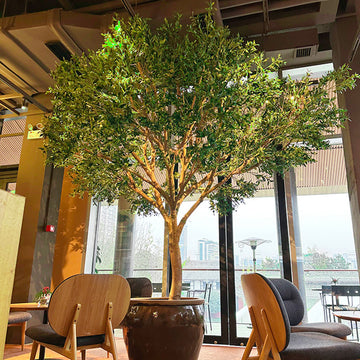


Stage design has undergone a remarkable transformation over the past decade. What was once a discipline defined almost entirely by lighting rigs, projection screens, and draping has evolved into something far more intentional, layered, and visually sophisticated. Today, the most memorable event stages — whether for a wedding ceremony, a corporate keynote, a gala dinner, or a brand activation — are built around a coherent design language that balances architecture, texture, atmosphere, and nature. Greenery has become one of the most powerful tools in that language, and the question of what makes the best fake plants for event stage styling is one that event planners, wedding designers, production companies, and hospitality teams are asking with increasing seriousness. The answer is nuanced: it depends on the scale of the stage, the tone of the event, the quality and realism of the plants, and how the greenery interacts with lighting, cameras, and spatial composition. What is consistent, however, is the growing consensus among event professionals that high-quality artificial plants and trees are the most reliable, design-forward, and operationally practical choice for stage applications across virtually every event format.
The shift toward artificial greenery for professional staging is not a compromise — it is a deliberate design decision made by planners and stylists who understand what stages actually demand. Fresh flowers and living plants have their place in event design, but they bring genuine limitations in a stage context: they wilt under heat and lighting, they require careful handling and water, their appearance degrades over the course of a long event, and they cannot be counted on to look identical across repeated use. Realistic artificial plants from professional-grade suppliers like Faux Natural solve all of these problems without sacrificing the visual sophistication that elevated event staging demands.
Why Fake Plants Work So Well on Event Stages

A stage, at its core, is a composition problem. It brings together hard architectural and technical elements — screens, podiums, truss systems, backdrops, staging risers, and lighting rigs — and asks the designer to make them feel cohesive, polished, and appropriate to the event's tone. Without softening elements, even beautifully designed stage structures can feel clinical, corporate in the wrong register, or visually flat. Greenery solves this problem more effectively than almost any other single design tool because it introduces organic shape, natural texture, and dimensional layering that hard-surface elements cannot replicate. A pair of tall artificial olive trees flanking a wedding ceremony stage transforms a flat backdrop into a framed, immersive environment. Clusters of lush floor plants softening the base of a conference speaker stage make the production feel warmer, more considered, and more visually complete.
The versatility of artificial greenery across different stage formats is another reason event professionals increasingly rely on it. At wedding ceremony stages, plants provide romantic architectural framing for the couple and the officiant, drawing the audience's eye and creating the depth that photographs beautifully. At conference and panel discussion stages, greenery softens the formality of table arrangements and podiums, humanizing the space without undermining its professional register. At brand activation and launch event stages, plants contribute to the narrative environment — communicating luxury, naturalness, vitality, or modernity depending on the species and styling chosen. At hotel ballroom galas and award dinner stages, layered greenery creates the kind of immersive, designed atmosphere that guests expect from a premium event. In all of these contexts, fake plants for event stage use deliver results that fresh alternatives simply cannot match for consistency and longevity.
What Makes the Best Fake Plants for Event Stage Styling?

Not all artificial plants are created equal, and the differences between a high-quality event-grade artificial tree and a low-cost decorative piece become extremely apparent in a stage environment. Stages are scrutinized closely — by guests seated at varying distances, by photographers and videographers capturing every angle, and increasingly by live-stream audiences watching on screens that reveal detail at a different resolution than the naked eye. Realism is therefore the foundational quality criterion for any artificial plant being considered for stage use. This means realistic leaf texture that catches light naturally rather than reflecting it in a way that reads as obviously plastic, accurate color tones that avoid the too-saturated green of poor-quality fakes, and natural branching structures that mirror the organic irregularity of real plants rather than following rigid, symmetrical patterns.
Beyond realism, scale is the next most critical factor. Stage design operates in architectural proportions, and artificial plants must be chosen to match those proportions rather than the residential or interior styling contexts for which many decorative plants are designed. A plant that looks generous and full in a living room may disappear against the scale of a six-meter-wide event stage. Tall artificial trees — in the 8 to 10 foot range and above — are frequently the most effective choices for stage corners, backdrop framing, and entrance zones, where height and visual presence are needed to balance the scale of the stage itself. Medium-height floor plants work well for layering at the front of the stage, podium areas, and side transitions. Smaller accent plants are most effective as filler, texture builders, and compositional detail rather than as primary stage elements.
The planter or base presentation also matters significantly for stage applications. An elegant artificial tree in a poorly chosen or visually inconsistent pot can undermine the entire staging concept. Planters should align with the event's design language — whether that means neutral stone-finish containers for a refined corporate event, woven rattan-style bases for a relaxed resort aesthetic, or sculptural geometric pots for a contemporary brand activation. Lighting compatibility is the final key factor: the best fake plants for event stage environments are those whose leaf surface, density, and silhouette perform well under both warm ambient lighting and more directional stage-wash scenarios. Always evaluate how a plant reads in the actual lighting conditions of the event rather than assuming that a beautiful showroom appearance will translate directly to the stage.
Why Event Professionals Often Choose Artificial Plants Over Fresh Plants

The practical case for artificial plants in stage design is compelling on every operational dimension. The most fundamental advantage is consistency: an artificial plant looks identical at the moment it is installed, at hour four of the event, under the heat of stage lighting, and when it is packed up and reinstalled three months later for a different event. Fresh plants simply cannot offer this kind of predictable performance, and on a stage where every visual element is designed, curated, and photographed, unpredictable visual degradation is a genuine risk. For wedding designers who have spent months developing a specific aesthetic vision for a ceremony stage, arriving to find that fresh foliage has wilted or browned overnight due to temperature changes or handling stress is a scenario that artificial greenery eliminates entirely.
The reusability of high-quality artificial plants also represents a significant long-term value proposition for event planning businesses, production companies, and venues. A well-made artificial tree from a professional supplier like Faux Natural can be deployed across dozens or hundreds of events over its operational lifetime without meaningful degradation in appearance — making the per-event cost of ownership far lower than fresh alternatives, which are single-use by nature. For event companies managing multiple bookings, the ability to own a core inventory of versatile, high-quality artificial plants that can be reconfigured across different stage layouts and event styles is a genuine competitive and financial advantage.
- No wilting or visual decline during the event
- Reusable across multiple events and stage formats
- Easier to transport, install, and reposition
- Consistent appearance under lighting and photography
- No watering, soil mess, or floral waste
- Ideal for planners who need reliable, polished results
Best Types of Fake Plants for Event Stages

Different plant species and forms serve different functions in stage design, and understanding the design language of each type is essential for making choices that feel considered rather than arbitrary. The most effective stage designers work with a palette of plant types — selecting hero trees that establish scale and presence, medium plants that build layering and transition, and accent greenery that adds texture and detail — rather than relying on a single species repeated without variation.
Tall artificial olive trees are among the most versatile and widely used plants in professional event staging, and for good reason. Their muted silver-green foliage, naturally irregular branching, and slender silhouette make them visually sophisticated without being demanding — they complement virtually any color palette, work across formal and informal event registers, and photograph beautifully in both natural and artificial light. They are particularly effective at weddings, gala dinners, hospitality events, and any occasion where an elegant, Mediterranean-inflected aesthetic is appropriate. For conference and corporate stages, olive trees provide softness and warmth without introducing the kind of theatrical botanical drama that might feel inconsistent with a business-focused event format.
Artificial palm trees occupy a different but equally important position in the event stage plant palette. Their dramatic frond structure, strong vertical presence, and instantly evocative aesthetic make them the right choice for tropical-themed events, resort and hospitality environments, brand activations with a high-energy or luxe-leisure register, and any summer event where the visual language is meant to feel warm, abundant, and celebratory. For stages designed to communicate aspiration and destination, a pair of tall artificial coconut palms flanking an entrance or backdrop moment can establish that narrative immediately and powerfully.
Fiddle leaf fig trees have become a signature plant of contemporary interior design, and their aesthetic sensibility translates directly to modern event staging. Their broad, structured leaves, clean branching, and rich dark green tones make them a strong choice for stages with a contemporary or design-forward brief — think tech company launches, modern wedding ceremonies with minimal florals, and premium retail or brand events with a curated lifestyle aesthetic. They work especially well when paired with neutral backdrops and warm lighting, where their leaf texture becomes particularly visible and dramatic.
Bamboo, dracaena, and similar upright, strappy-leaved plants introduce a softer, more organic energy that works well in wellness events, spa-adjacent hospitality staging, and any event where the overall atmosphere is meant to feel grounded, calm, and considered rather than dramatic. These plants work particularly well in layering compositions, filling the visual space between taller trees and lower floor plants with an intermediate presence that adds complexity and depth to the overall stage composition. Eucalyptus and softer feathery foliage plants serve a related function as filler and texture builders, softening the harder structural lines of taller trees and helping the overall greenery composition feel abundant and generously designed rather than sparse.
Recommended Faux Natural Plants for Event Stage Styling

Faux Natural offers a professional range of artificial trees, floor plants, and specialty botanical pieces designed for exactly the demands of event staging — realistic foliage, event-ready scale, and durable construction built for repeated professional use. The following selections represent some of the strongest options for event stage applications across wedding, corporate, gala, and brand activation contexts.
1. Artificial Olive Tree 8.5ft Tall
The Artificial Olive Tree 8.5ft Tall is a refined, elegantly proportioned stage tree that delivers genuine visual presence without overwhelming the stage composition. Its natural branching structure and muted silver-green foliage work across a wide range of event aesthetics — from contemporary weddings to corporate conferences and hospitality dinners. At 8.5 feet, this olive tree is scaled appropriately for most ballroom, marquee, and medium-scale event stages, and it is a consistently strong choice for planners who need dependable elegance in a highly versatile format.

2. Artificial Fig Tree with Natural Wood Trunk
The Artificial Fig Tree with Natural Wood Trunk distinguishes itself with a genuine wood trunk base that elevates the realism of the overall presentation significantly — particularly important in close-proximity stage environments where guests can see botanical detail clearly. Its generous canopy and rich leaf coloring make it an excellent choice for contemporary wedding stages, design-forward corporate events, and luxury brand activations where botanical credibility matters. The natural wood trunk also makes this tree more visually appropriate in premium event contexts where standard plastic or resin bases might read as inconsistent with the overall design standard.

3. Artificial Dracaena Tree — Faux Natural Touch 8.5ft
The Artificial Dracaena Tree at 8.5ft brings an upright, architectural presence to stage design that works particularly well in wellness, hospitality, and lifestyle event environments. Its strappy, layered foliage and clean upright silhouette provide a softer and more organic counterpoint to the structured lines of screens, podiums, and staging panels. This plant is especially effective when used in groupings alongside other species to build textural layering and botanical depth in a stage composition.

4. Artificial Bamboo Tree — Lifelike Foliage for Indoor Décor
The Artificial Bamboo Tree introduces a calm, grounded aesthetic energy that is particularly valuable in wellness retreat staging, spa event environments, and any event format where the visual language is intended to feel natural, restorative, and unhurried. Bamboo's tall, slender, and gently asymmetrical form also makes it a useful framing plant at the edges of stage panels and backdrop structures, providing height and visual movement without the solid silhouette density of broader-canopied trees.

5. Signature Artificial Eucalyptus Tree Bonsai — 7.9ft Silver Dollar
The Signature Artificial Eucalyptus Bonsai in Silver Dollar is a distinctive and sculptural choice for stages that call for something more refined and considered than the standard floor plant repertoire. Its silver-toned round leaves and bonsai-influenced form make it an elegant accent in premium wedding stages, luxury corporate environments, and intimate gala settings where botanical detail and design sensibility are equally important. Used alongside taller trees or as a podium-area feature, this piece adds a layer of curated horticultural sophistication that distinguishes a truly designed stage from one that simply has plants in it.

6. Artificial Coconut Palm Tree — Large Natural Wood Trunk, Outdoor Use
The Artificial Coconut Palm Tree with Natural Wood Trunk is a large-scale, high-impact stage plant designed for outdoor events, resort environments, and any occasion where maximum botanical drama is the brief. Its broad, sweeping fronds and natural wood trunk construction make it one of the most convincing artificial palms available for event use, with a presence that reads strongly even at significant viewing distances. This palm is an excellent primary statement plant for festival stages, outdoor branded events, and destination wedding environments.

7. Large Faux Coconut Palm Tree — Indoor and Outdoor
The 8ft Large Faux Coconut Palm Tree offers the tropical drama of a full palm at a scale that works equally well indoors and outdoors, giving event planners flexibility across ballroom stages, outdoor festival environments, and large marquee events. At eight feet, this palm creates a commanding visual presence that can anchor a stage corner or entrance moment with genuine impact. Its dual indoor-outdoor suitability makes it one of the most versatile large-format plants in a professional event staging inventory.

8. Artificial Olive Tree 10ft Tall — Indoor and Outdoor
The Artificial Olive Tree at 10ft represents the premium tier of the olive tree category, offering the full visual authority of a mature olive tree at a scale appropriate for large ballroom stages, grand entrance moments, and elaborate outdoor ceremony backdrops. At ten feet, this tree holds its own against the scale of large-format event environments where smaller plants would simply disappear. It is a strong choice for wedding designers, gala planners, and hospitality event teams who need a single plant to make an immediate and lasting visual statement.

9. Artificial Cherry Blossom Tree 10ft — Vibrant Pink Decoration
The Artificial Cherry Blossom Tree at 10ft in Vibrant Pink is a statement botanical piece for stages where romance, celebration, and floral abundance are central to the design concept. At full height, this cherry blossom creates a canopy of soft pink bloom that transforms a stage backdrop into something genuinely spectacular — particularly under warm event lighting. It is most effective at spring weddings, luxury galas, Asian-influenced event concepts, fashion presentations, and any event format where theatrical botanical beauty is the primary visual objective.

10. 8ft White Cherry Blossom Tree — Lighted Fiberglass Trunk
The 8ft White Cherry Blossom Tree with Lighted Fiberglass Trunk elevates the cherry blossom concept further with integrated lighting and a premium fiberglass trunk that provides both greater realism and structural strength for intensive event deployment. The white blossom palette makes this tree exceptionally versatile — working beautifully at winter galas, all-white event concepts, elegant product launches, and any stage design where softness and luminosity are the dominant aesthetic values. The integrated lighting means this tree creates its own atmospheric contribution rather than simply receiving light from external stage sources.

11. Artificial Weeping Willow Tree 8ft — Outdoor Use
The Artificial Weeping Willow Tree at 8ft is a genuinely distinctive stage plant that introduces the romantic, cascading silhouette of a willow into event staging — a form that is both immediately recognizable and relatively rare in artificial plant collections, making it a strong choice for designers who want something more unexpected than the standard tree repertoire. Its trailing foliage creates a natural curtaining effect that can be used to soften stage edges, frame intimate ceremony moments, or add botanical poetry to a photo backdrop. For outdoor weddings and garden-party-style events, this willow is an exceptional statement piece.

12. Artificial Fiddle Leaf Fig Tree 10ft — Indoor Display
The Artificial Fiddle Leaf Fig Tree at 10ft is among the most design-forward artificial trees available for professional event staging, combining the currently iconic status of the fiddle leaf fig species with a scale that commands attention on even large stages. At ten feet, the broad, deeply veined leaves of this tree become a genuine design statement, particularly in contemporary and luxury event environments where botanical sophistication is part of the brand identity. It performs beautifully under warm lighting, where the leaf texture and dark green tones create a depth and richness that photographs exceptionally well.

13. Artificial Maple Tree 3m — Vibrant Leaves for Wedding Décor
The Artificial Maple Tree at 3 meters with Vibrant Leaves is a seasonal showpiece that brings the visual drama of autumn color to event stages throughout the year — an advantage that no fresh alternative could deliver. At three meters, this tree is scaled for large ballroom and grand hall environments where its rich amber and red leaf palette can function as the single most visually arresting element on the stage. It is particularly powerful at fall weddings, harvest-themed galas, and high-end corporate events where seasonal botanical drama is part of the event's intended emotional register.

14. Large Silk Wisteria Tree for Elegant Decoration
The Large Silk Wisteria Tree is a breathtakingly romantic botanical piece that brings cascading clusters of purple and mauve bloom to stage backdrops, entrance arches, and photo moment zones with an effect that few other plants can match. The drooping blossom clusters create an immediately atmospheric and deeply memorable visual environment, making this tree an exceptional choice for luxury weddings, fashion events, and any occasion where creating a genuine moment of botanical wonder is part of the design brief. Under warm lighting, the silk wisteria blossoms glow with a luminosity that elevates the overall stage atmosphere considerably.

15. Artificial Wedding Tree Model 8ft — Decorative Scenic Tree
The Artificial Wedding Tree at 8ft — Decorative Scenic Model is designed specifically for the demands of wedding and celebration staging, offering a refined and decorative tree silhouette that functions as a ready-made scenic element rather than simply a plant. Its event-optimized design makes it particularly effective at ceremony stages, sweetheart table backdrops, and photo opportunity zones where a polished, designed aesthetic is more appropriate than the organic irregularity of naturalistic trees. For wedding designers and event stylists who need reliable, consistent, and visually elegant tree pieces that work immediately in any setting, this scenic tree is a strong foundational investment.

Browse the full collection of artificial trees, faux floor plants, artificial olive trees, artificial palm trees, artificial fiddle leaf figs, and silk evergreen plants at Faux Natural to find the right pieces for your next event stage. Explore dedicated collections for weddings and celebrations, hotels and hospitality, and industry-specific applications.
How to Use Fake Plants Strategically on a Stage

The difference between greenery that elevates a stage and greenery that clutters it lies almost entirely in placement strategy and compositional thinking. Artificial plants are not accessories to be arranged by feel — they are design elements that need to be deployed with the same intentionality as lighting, backdrop choice, and furniture arrangement. Understanding the principles of stage composition and how plants function within them is what separates professional-quality stage styling from amateur attempts that end up feeling random or overwhelming.
The most fundamental principle is framing. Tall plants and trees placed at the outer edges of the stage — particularly in the corners or at the transition between the stage platform and the backdrop — create a natural visual frame that draws the audience's eye toward the center of the stage where the speaker, ceremony couple, or key visual element is positioned. This framing function is deeply intuitive to human visual perception, drawing on the same compositional principles that make trees flanking a pathway or columns framing a doorway feel so naturally right. The plants at these positions should be tall enough to reach a meaningful portion of the stage's height — which typically means a minimum of eight feet for medium-scale stages and ten feet or taller for grand ballroom or large conference environments.
In front of and around the stage platform itself, layering is the key compositional strategy. Medium-height floor plants placed at the front of the stage create a transition zone between the elevated platform and the audience level, softening what would otherwise be a hard architectural edge. Lower accent plants, dense clusters of textural greenery, or decorative botanical filler around the base of planters and stage risers add detail and abundance to the composition at close viewing range. This layering of heights — tall trees at the back and sides, medium plants in the mid-zone, low accent greenery at the front — creates the dimensional, designed quality that distinguishes a truly styled stage from one where plants have simply been placed without compositional consideration.
- Use taller plants or trees to frame the outer edges of the stage
- Layer medium and low greenery near the front for depth
- Keep podiums, speakers, and screens visually clear
- Match plant scale to the size of the stage and ceiling height
- Use planters that align with the event's design language
- Test how greenery looks under stage lighting before the event begins
What Doesn't Work: Common Stage Greenery Mistakes

Understanding what goes wrong with artificial plants on event stages is as instructive as knowing what works. The most visible and damaging mistake is choosing plants with unrealistic leaf texture or surface quality — particularly those with a glossy, plastic sheen that reflects stage lighting in an obviously artificial way. In a residential setting, a moderately realistic artificial plant may read as acceptable at normal interaction distance. On a stage that is examined from every angle, photographed with professional cameras, and potentially broadcast to a live-stream audience, the same plant can look glaringly fake. The standard for artificial plants in stage applications is genuine botanical realism, and anything that falls short of that standard risks undermining the entire design concept.
Scale mismatch is the next most common problem. Event planners who are accustomed to working with interior décor — where a 4 or 5 foot plant can feel generous and present in a room setting — sometimes bring that same scale thinking to stage design, where it simply doesn't translate. A plant that reads as bold and architectural in a hotel lobby feels miniature against the scale of a 6-meter-wide conference stage. The golden rule for stage greenery is to err toward larger and taller rather than smaller and safer — a plant that is slightly oversized for a stage will always look more intentional and designed than one that is too small to register visually.
Overcrowding is a related but distinct problem. In an attempt to create a lush and abundant stage environment, some designers add too many plant elements without establishing a clear compositional hierarchy. The result is visual noise rather than designed depth — a backdrop that feels cluttered and indiscriminate rather than curated and intentional. Every plant on a stage should have a specific compositional purpose: framing, layering, transition, or accent. Plants that cannot be assigned a clear purpose in those terms are usually plants that should not be there.
- Choosing glossy or unrealistic greenery that looks artificial on camera
- Using plants that are too small for the scale of the stage
- Blocking important views, signage, or movement paths
- Adding too many greenery elements without composition or hierarchy
- Ignoring the impact of lighting and photography on leaf texture
- Using pots or planters that feel mismatched to the event style
Design Tips for Styling Fake Plants on Event Stages

Event stage styling with artificial greenery rewards systematic thinking and a clear design concept more than any amount of product variety. The most beautifully styled stages are typically those that have been built around a coherent botanical vision — a specific palette of plant species, planter finishes, and foliage tones that work together as a unified design statement rather than a collection of individual attractive plants. Before selecting any products, define the stage's botanical design language: is it naturalistic and organic, formal and architectural, lush and tropical, or minimal and refined? Every plant selection, planter choice, and placement decision should serve that defined aesthetic direction consistently.
- Choose one or two hero plants to define the stage composition
- Use greenery to soften technical production elements and hard edges
- Balance visual impact with clear sightlines for guests and cameras
- Layer heights to make the stage feel more dimensional
- Select reusable artificial plants that can work across multiple event formats
- Consider how the plant palette reads in both warm and cooler lighting scenarios
- Align planter style and finish with the event's furniture and décor palette
Frequently Asked Questions: Fake Plants for Event Stage Décor
What are the best fake plants for event stage décor?
The best fake plants for event stage décor are those that combine genuine botanical realism with event-appropriate scale and design versatility. Tall artificial olive trees, fiddle leaf fig trees, and palm trees are consistently strong choices for primary stage framing and corner placement. Dracaena, bamboo, and eucalyptus varieties work well for layering and texture-building. The most effective stage greenery programs combine a hero tree species that establishes the botanical design language with supporting plants that add depth, texture, and compositional complexity around it. All plants selected for stage use should be from professional-grade suppliers whose products are specifically designed for the realism standards that event photography and professional staging demand.
Are artificial plants good for wedding stages?
Artificial plants are an excellent choice for wedding stages, and many leading wedding designers prefer them for precisely the reasons that make weddings so demanding: the event runs for many hours, often under intense lighting and heat, and every detail is photographed from multiple angles throughout. High-quality artificial plants maintain their appearance perfectly from ceremony through to reception without wilting, browning, or visually declining. They can also be pre-styled and installed more easily than fresh alternatives, reducing setup pressure on the day. For destination weddings, multi-day events, and ceremonies in challenging temperature environments, the reliability advantage of artificial greenery is particularly significant.
What fake plants work best for corporate event stages?
Corporate event stages benefit most from artificial plants that balance refinement with approachability — species that soften the formality of a business environment without introducing a theatrical or overly decorative quality that might feel inconsistent with the event's professional register. Artificial olive trees are a particularly strong choice for corporate stages because their muted, elegant foliage works across a wide range of corporate brand aesthetics without demanding attention or competing with screens and signage. Fiddle leaf figs are effective for tech, design, and lifestyle brand events with a contemporary design brief. Bamboo and dracaena work well in wellness, financial services, and hospitality-adjacent corporate contexts.
How do you make artificial plants look more realistic on a stage?
Making artificial plants look convincingly realistic in a stage environment starts with product selection — only plants with genuinely high-quality leaf texture, accurate color variation, and natural branching structures will pass close scrutiny under stage lighting. Beyond the product itself, styling choices have a significant impact on perceived realism: use planters that feel consistent with the plant species and the event aesthetic, dress the planter base with natural moss, bark chips, or stone filler to eliminate the obviously artificial appearance of an empty pot, and arrange plants in slightly asymmetric groupings that mirror natural botanical growth rather than perfect geometric arrangements. Test how the plants read under the actual stage lighting conditions before the event begins, and adjust positioning if specific lighting angles reveal unrealistic reflections or color shifts.
Can fake plants be reused for multiple events?
Yes — and this is one of the strongest practical arguments for investing in high-quality artificial plants for event staging. Professional-grade artificial trees and floor plants from suppliers like Faux Natural are designed and constructed specifically for repeated event deployment, with durable materials, robust internal structures, and foliage treatments that maintain their appearance across many uses. A well-maintained artificial tree can be deployed across dozens or even hundreds of events over its operational lifetime, making its per-event cost of ownership far lower than fresh alternatives. Proper storage — keeping plants protected from crushing, UV exposure, and moisture accumulation between events — is the primary factor in maintaining their quality across repeated use.
What size fake plants work best for a stage backdrop?
The appropriate size of artificial plants for a stage backdrop depends primarily on the scale of the stage itself and the ceiling or canopy height of the venue. As a general rule, primary backdrop plants should reach a minimum of 60 to 70 percent of the stage's visual height to register with authority rather than appearing miniature against the backdrop structure. For most medium-scale event stages in hotel ballrooms and marquee environments, this means selecting trees in the 8 to 10 foot range. For grand-scale venues with high ceilings and large stage footprints, taller trees or tiered plant arrangements that reach 12 feet or more may be necessary to create a proportionally appropriate visual impact.
Are artificial trees better than fresh plants for stage design?
For most professional stage design applications, artificial trees deliver a more consistent, reliable, and operationally practical result than fresh plants. Fresh plants and trees have inherent unpredictability — their appearance at any given moment depends on how recently they were conditioned, how they have been transported and handled, the temperature and humidity of the venue, and how long they have been in place before and during the event. Artificial trees eliminate all of these variables, delivering a perfectly controlled appearance from installation through the end of the event and across repeated uses. For event professionals who are responsible for delivering specific aesthetic results under real-world time and logistical pressures, that predictability is genuinely valuable.
Conclusion: Elevating Event Stages with the Right Artificial Greenery
The best fake plants for event stage décor are not simply decorative fillers — they are strategic design elements that shape the spatial quality, emotional atmosphere, and visual sophistication of the entire stage environment. When chosen thoughtfully, scaled correctly, and deployed with compositional intention, artificial plants transform stages from functional production structures into immersive, designed environments that guests experience, remember, and photograph. The combination of genuine botanical realism, professional-grade durability, and operational practicality that high-quality artificial greenery offers makes it the clear choice for event planners, wedding designers, production companies, and hospitality teams who need reliable, beautiful results across demanding event conditions.
The investment in quality matters enormously in this category. The difference between a professional-grade artificial tree and a consumer-level decorative plant is visible to every guest, every photographer, and every camera that encounters it on a stage. Faux Natural's range of commercial artificial trees, realistic floor plants, and specialty botanical pieces is designed and curated specifically for the standards that professional event environments demand — with the realism, scale, and construction quality to perform beautifully across every format from intimate wedding ceremonies to large-scale conference productions and branded festival stages.
Whether you are building a new staging inventory, refreshing your existing plant collection, or sourcing specific hero pieces for a landmark event, explore the full range of event-ready artificial greenery at Faux Natural's event and exhibition collection, or browse by event type across the weddings and hospitality collections to find exactly the right plants for your stage.


